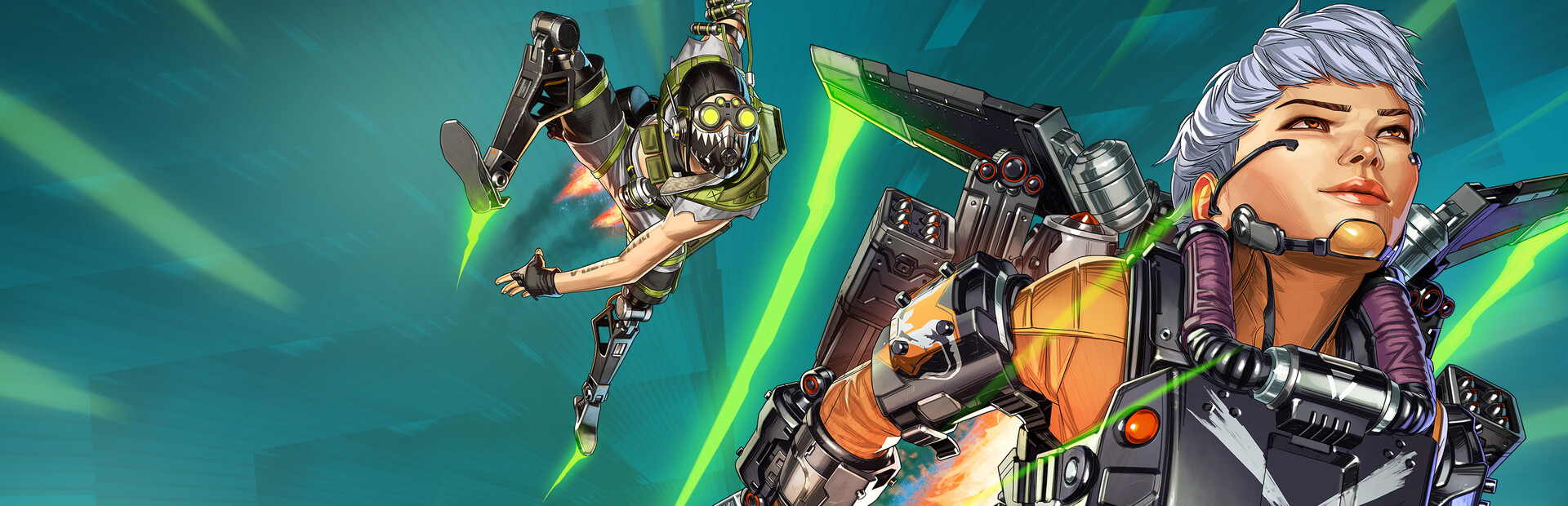
Still Fast, Still Furious, Still Frustrating
There is a particular kind of heartbreak reserved for games that you know are great but that seem determined to undermine themselves at every turn. Apex Legends in Season 24 is that game. Six years after its surprise launch reshaped the battle royale landscape, Respawn Entertainment's hero shooter still possesses the finest gunplay and movement mechanics in the genre. Nothing else feels this good. And yet, playing Apex Legends in 2025 means navigating a minefield of broken matchmaking, predatory store pricing, and content droughts that would test the patience of even its most devoted fans. The foundation is a masterpiece. Everything built on top of it is a mess.
Overview
Apex Legends launched in February 2019 as a free-to-play battle royale set in the Titanfall universe, developed by Respawn Entertainment and published by Electronic Arts. It distinguished itself immediately with its class-based legend system, ping communication tools, and silky-smooth movement mechanics built on a modified Source engine. Season 24 continues the game's live-service cadence, introducing a new legend, balance adjustments to the weapon meta, the long-awaited cross-progression system that finally lets players merge accounts across platforms, and a series of map rotations that bring back fan-favorite locations. The season launched with the kind of fanfare that Apex has always been capable of generating, but the substance behind the spectacle reveals a game struggling with an identity crisis between competitive integrity and revenue extraction.
Gameplay and Mechanics
We need to be emphatic about this: no battle royale, and frankly no first-person shooter currently on the market, matches Apex Legends in terms of how it feels to play. The gunplay is a masterclass in weapon design. Every gun in the arsenal has distinct recoil patterns, audio profiles, and tactical niches. The R-301 remains the gold-standard assault rifle, the Wingman rewards precision with devastating damage, and the Peacekeeper's shotgun blasts carry a visceral satisfaction that other games can only dream of achieving. Respawn's background in crafting Titanfall's legendary movement systems shines through every mechanic: sliding down hills builds momentum, bunny-hopping around corners creates outplay opportunities, and the addition of wall-running on certain legends has added vertical layers to engagements that keep the skill ceiling perpetually out of reach.
The legend roster in Season 24 sits at over twenty-five characters, each with a tactical ability, passive trait, and ultimate. The new legend introduced this season fits neatly into the support category, offering a deployable shield pylon that absorbs incoming ordnance while healing nearby allies. The design is clean and the kit is useful without being overpowered, which is more than can be said for several previous legend launches that warped the meta for weeks. Team composition matters in Apex more than in any other battle royale, and the interplay between legends creates strategic depth that keeps matches feeling varied despite the repetitive structure of the genre.
And then there is the matchmaking. Season 24's ranked system is, to put it diplomatically, broken. Skill-based matchmaking has been a contentious topic in Apex for years, but this season it has reached a breaking point. Casual lobbies feel indistinguishable from ranked play, with Diamond and Predator-ranked players routinely appearing in matches alongside newcomers. The result is a punishing experience for average players who simply want to enjoy the game without being annihilated by someone with ten thousand hours of practice. Ranked itself suffers from different problems: point inflation has made climbing feel meaningless, and the competitive integrity that once defined Apex's best seasons has been eroded by inconsistent tuning and poor anti-cheat enforcement.
Presentation
Apex Legends has always punched above its weight visually for a free-to-play title, and Season 24 maintains that standard. The art direction across its map pool remains vibrant and distinctive, with each location carrying a strong visual identity. Character models and animations are top-tier, with legend personalities conveyed through idle animations, voice lines, and execution finishers that give each character genuine personality. The UI has received incremental improvements over the years, though the store interface remains deliberately designed to confuse players about the value of in-game currency, a decision that speaks volumes about EA's priorities.
Sound design is exceptional and functionally critical. Footstep audio, gunfire direction, and ability sound cues provide essential tactical information, and Respawn has invested heavily in spatial audio that rewards players who listen as carefully as they aim. The soundtrack is understated but effective, with each season's theme music setting the tone for the narrative beats that accompany map changes and legend introductions. Performance across platforms is generally solid, though console players on older hardware may experience frame drops during late-ring fights with multiple ultimate abilities triggering simultaneously. The long-standing server tick rate issues have not been addressed in any meaningful way, and hit registration still occasionally feels inconsistent in high-ping situations.
Content and Value
Here is where Apex Legends begins to stumble. As a free-to-play game, the base experience is generous: all legends can be unlocked through gameplay (albeit slowly), all maps and modes are accessible, and the core battle royale experience is available to anyone who downloads the client. The seasonal battle pass offers cosmetic rewards across one hundred tiers, and the cross-progression system introduced this season is a genuine quality-of-life improvement that should have arrived years ago.
But the monetization surrounding that base experience has become increasingly aggressive. Individual legend skins routinely cost twenty dollars or more. Collection events require players to purchase or craft every item in a set to unlock a limited heirloom weapon, a process that can cost upwards of one hundred and sixty dollars. The store rotates items deliberately to create artificial scarcity and FOMO purchasing impulses. And the content delivered between these monetization events feels thin. Season 24 brought one new legend and a map rotation but no new permanent game mode, no new weapon, and no meaningful evolution of the core experience. For a game generating hundreds of millions in annual revenue, the content pipeline feels anemic. Compare Apex's seasonal offerings to those of Fortnite or even Call of Duty Warzone, and the disparity is glaring.
What Works and What Doesn't
What works is the core. The gunplay is peerless, the movement is unmatched, and the legend system creates strategic depth that no other battle royale offers. When you are in a match, communicating with your squad, hitting your shots, and outmaneuvering opponents, Apex Legends is the best game in its genre. The new legend is well-designed. Cross-progression is a welcome addition. The fundamentals remain extraordinary.
What doesn't work is everything surrounding that core. Matchmaking is broken and has been for multiple seasons. Monetization has crossed the line from aggressive to exploitative. Content delivery has slowed to a crawl. Server performance has not meaningfully improved since launch. The competitive scene, once thriving, has contracted as organizations pull out and prize pools shrink. Apex Legends feels like a game being milked for maximum short-term revenue rather than invested in for long-term health, and the community's frustration is reaching a boiling point that no amount of excellent gunplay can indefinitely contain.
Pros
- Gunplay remains the best-in-class for battle royale
- Movement system is unmatched in the genre
- New legend is thoughtfully designed
- Cross-progression is finally here
Cons
- Matchmaking is fundamentally broken
- Monetization has become increasingly aggressive
- Content droughts between seasons are noticeable
- Server issues and tick rate problems persist
Final Verdict
Apex Legends in Season 24 is a study in contradictions. Its mechanical foundation is so strong that it remains compelling despite the layers of frustration piled on top of it. We cannot recommend any other battle royale more highly if your primary concern is how a shooter feels to play. But we also cannot ignore the matchmaking that punishes average players, the monetization that exploits dedicated fans, and the content pace that suggests a game coasting on past glory rather than pushing forward. Apex Legends is still great. It could be extraordinary if the people profiting from it would invest as much in its future as the people playing it invest in their time. For now, it earns a cautious recommendation: play it for the gunplay, tolerate the rest, and hope that Season 25 remembers what made this game special in the first place.