Opening Hook
Leave it to Valve to look at two of gaming's most established genres, smash them together, and somehow create something that feels entirely fresh. Deadlock is the kind of game that shouldn't work on paper — a MOBA with lanes, creeps, and towers fused with slick third-person shooter combat — yet the moment you land your first headshot while zipping along a rail toward an enemy guardian, it all clicks into place with that unmistakable Valve magic. After spending well over a hundred hours in the streets of its strange, industrialized map, we can confidently say that Deadlock is the most exciting competitive game to emerge in years. It's rough around certain edges, and it demands a lot from its players, but the foundation here is nothing short of extraordinary.
Overview
Deadlock began life as one of the worst-kept secrets in gaming. Rumors swirled for years about a mysterious Valve project codenamed "Neon Prime," and what eventually emerged from that prolonged development period is a 6v6 competitive game that asks players to master both MOBA fundamentals and shooter mechanics simultaneously. Matches take place on a single, symmetrical map featuring four lanes connected by underground pathways and zipline networks. Each team pushes lanes by escorting trooper waves into enemy guardians and ultimately the enemy patron — their base's core objective. But unlike traditional MOBAs where you click to move and activate abilities from an isometric view, Deadlock drops you into a tight third-person camera where your aim, movement, and spatial awareness matter just as much as your item builds and ability timing.
Valve released Deadlock into open access in 2025 after an extended closed playtest period that generated enormous community discussion. The game is free-to-play with cosmetic monetization, following the proven model Valve established with Dota 2 and Counter-Strike 2. At launch, the game features over twenty unique heroes — each with four abilities and a distinct weapon — alongside a sprawling item shop with dozens of purchasable upgrades. It's ambitious, complex, and deeply rewarding for those willing to invest the time.
Gameplay and Mechanics
The core gameplay loop of Deadlock is deceptively layered. On the surface, you're playing a shooter: you aim, you shoot, you use abilities on cooldowns. But underneath that accessible shell lies a MOBA of considerable depth. The laning phase feels familiar to anyone who has played Dota 2 or League of Legends — last-hitting troopers generates souls (Deadlock's currency), denying enemy last-hits starves their economy, and controlling lane equilibrium determines who has the positional advantage. The twist is that all of this happens in real-time third-person combat. You're not just timing your clicks on a health bar; you're tracking a moving target, leading your shots, and dodging incoming fire while trying to secure those critical last hits. It's a multitasking challenge unlike anything else in the genre.
Each hero in Deadlock feels genuinely distinct. Characters like Haze play as glass-cannon assassins who rely on stealth and burst damage, while tanky frontliners like Abrams can wade into fights and sustain through incredible punishment. Support-style heroes such as McGinnis set up turrets and healing stations, creating zones of control that reshape how fights play out. What impresses us most is how Valve has managed to make every hero viable in multiple roles depending on item builds. The item system is the beating heart of Deadlock's strategic depth. Divided into four categories — Weapon, Vitality, Spirit, and Flex — items don't just provide stat boosts but fundamentally alter how your abilities function. A spirit-focused build on a traditionally weapon-oriented hero can create entirely new playstyles, and the theorycrafting potential here rivals Dota 2 at its most complex.
Map design deserves special praise. The single map is densely packed with verticality, underground shortcuts, ziplines, and breakable terrain. Movement in Deadlock is fast and fluid — you can dash, double-jump, grind on rails, and use abilities to traverse the environment in creative ways. The mid-game transition from laning to roaming and team fighting feels organic, with objectives like the Midboss and Rejuvenator spawns creating natural convergence points. Late-game base sieges are chaotic and thrilling, with abilities and bullets flying from every direction as teams coordinate pushes and defenses. The skill ceiling for mechanical play is staggeringly high, and we suspect it will take the competitive community months, if not years, to fully explore the game's strategic space.
Presentation
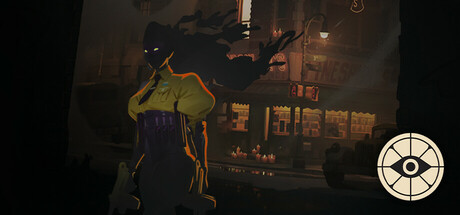
Deadlock's visual presentation is perhaps its most polarizing element. Valve opted for a stylized, somewhat muted aesthetic that blends noir-industrial architecture with supernatural elements. The color palette leans heavily into browns, greens, and deep oranges, with ability effects providing the primary visual pop. Character designs range from inspired — the spectral gunslinger Wraith is wonderfully eerie — to somewhat generic, with a few heroes that lack visual personality. Compared to the vibrant, instantly readable character designs of Overwatch or Valorant, Deadlock's cast can feel understated, and during hectic team fights, visual clarity occasionally suffers.
Sound design, however, is outstanding. Weapons have satisfying weight and distinct audio profiles, ability cues are clear and well-mixed, and the ambient soundscape of the map creates genuine atmosphere. The announcer provides useful callouts without being overbearing, and the ping system allows for effective non-verbal communication. The UI is clean and functional, though the in-game shop can be overwhelming for new players given the sheer number of available items. Performance is excellent on modest hardware, as expected from a Valve title running on the Source 2 engine — we experienced stable framerates well above 120fps on mid-range configurations.
Content and Value
As a free-to-play title, Deadlock offers remarkable value. The full hero roster is available from the start with no unlocking required, and all gameplay-relevant content is accessible without spending a cent. Valve's monetization follows the cosmetic-only approach, with hero skins, ability effects, and profile customizations available for purchase. The battle pass system offers a progression path for cosmetic collectors without gating any competitive content behind a paywall.
That said, the content offering at launch feels somewhat lean compared to competitors. The single map, while excellently designed, means every match takes place in the same environment. The hero roster of roughly two dozen characters is respectable but smaller than what established MOBAs offer. Valve has communicated a commitment to regular hero releases and has already begun teasing new characters during the playtest period, so we expect the roster to grow substantially over the coming year. Ranked mode, custom lobbies, and a replay system are all present, providing the essential competitive infrastructure. The question is whether Valve can maintain the content cadence needed to keep the player base engaged through those critical first months.
What Works and What Does Not
What works in Deadlock is the fundamental gameplay fusion. The marriage of MOBA strategy and shooter mechanics creates moment-to-moment gameplay that is consistently exciting and deeply strategic. The item system provides endless build variety, the hero designs allow for diverse playstyles, and the map's verticality and traversal options make movement a constant source of joy. Valve's technical execution is predictably polished, with strong netcode, solid performance, and a responsive feel to every action.
What struggles is everything surrounding that core. The learning curve is genuinely brutal — new players face the combined complexity of learning MOBA concepts, shooter mechanics, item builds, and map navigation simultaneously. Match times averaging 30-40 minutes mean a single bad game represents a significant time investment, and comeback mechanics, while present, can make games feel drawn out when the outcome seems decided. The visual style, while growing on us over time, lacks the immediate appeal and readability of Valve's other titles. And the limited hero and map count at launch, while understandable for a newly released game, means content fatigue could set in for dedicated players faster than ideal.
Pros
- Unique MOBA-shooter hybrid that genuinely works
- Deep item and build system with enormous theorycrafting potential
- Valve's production quality shines in gunplay, netcode, and performance
- High skill ceiling rewards dedicated practice
Cons
- Steep learning curve combining two complex genres
- Limited hero roster at launch
- Long match times with inconsistent pacing
- Visual style is divisive and can hinder clarity
Final Verdict
Deadlock is the boldest competitive game release in years, and it largely delivers on its audacious premise. Valve has proven once again that they understand competitive game design at a fundamental level, creating a hybrid that respects the depth of MOBAs while embracing the visceral thrill of shooters. It won't be for everyone — the learning curve alone will filter out many casual players, and the visual presentation lacks the polish we've come to expect from Valve's flagship titles. But for players who crave strategic depth married to mechanical skill expression, Deadlock offers a competitive experience that no other game currently provides. We believe this has the foundation to become one of the defining competitive titles of this generation, provided Valve supports it with the content and community features it needs to thrive. If you have the patience to climb the learning curve, Deadlock will reward you with some of the most satisfying competitive gaming available today.