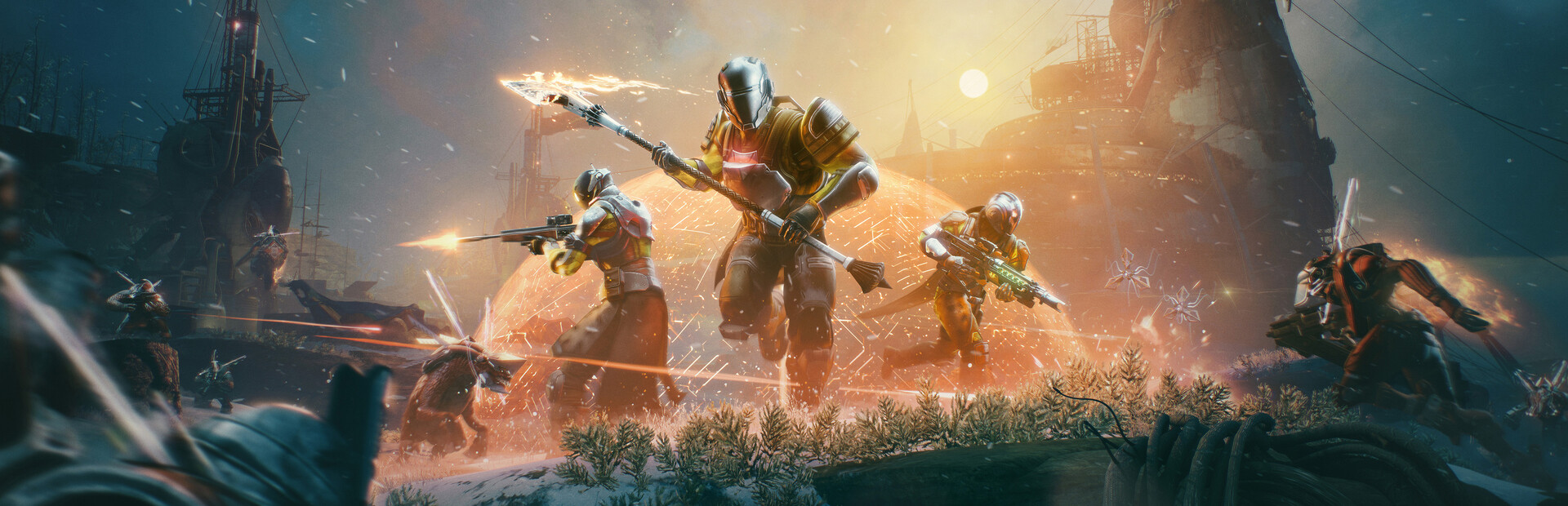
Opening Hook
There is a particular kind of heartbreak that only Destiny players understand. It is the feeling of knowing, with absolute certainty, that a game's moment-to-moment gameplay is among the finest ever created — and watching, helplessly, as everything surrounding that gameplay erodes. Destiny 2: Frontiers arrives at the most turbulent moment in the franchise's history. Bungie has weathered devastating layoffs, a bruising integration into Sony's corporate structure, the departure of key creative leads, and a community whose patience has been stretched to its breaking point. Frontiers, the first major content release following The Final Shape's emotionally satisfying conclusion to the Light and Darkness saga, is tasked with answering an existential question: what is Destiny 2 now? After spending weeks with the new episodic content, our answer is complicated. The gunplay is still peerless. The raids are still magnificent. But the game surrounding them feels thinner, more uncertain, and more aggressively monetized than ever before. Frontiers is not a disaster — it is something almost worse. It is a game that can no longer coast on potential.
Overview
Destiny 2: Frontiers represents Bungie's pivot from the traditional expansion model to an episodic structure. Rather than releasing a single large expansion annually, the studio now delivers episodes — themed content drops spread across the year, each containing a mini-campaign, new activities, weapons, and story beats. Frontiers is the second episode following Echoes, which launched shortly after The Final Shape. The new episode introduces a frontier-themed patrol zone, a six-player matchmade activity, a new exotic quest line, and the continuation of a narrative that deals with the fallout of the Witness's defeat and the fracturing alliances in its wake. The base game is free-to-play, but accessing Frontiers content requires either the current annual pass ($40) or the individual episode purchase ($15). Destiny 2 is available on PC, PS5, and Xbox Series X, with full cross-play and cross-save functionality.
Gameplay and Mechanics
We need to say this plainly: Destiny 2's gunplay is still the best in the industry. No other shooter — not Valorant, not Call of Duty, not Halo — matches the visceral, crunchy, deeply satisfying feeling of firing a weapon in Destiny. Every archetype, from rapid-fire pulse rifles to aggressive-frame shotguns, has a distinct personality conveyed through recoil patterns, sound design, reload animations, and the way enemies react to being hit. The new weapons introduced in Frontiers continue this tradition. The exotic trace rifle, a weapon that chains lightning between targets, feels like a power fantasy made tangible. The new strand-infused sidearm rewards precision shots with explosive vines that crowd-control entire rooms. Bungie's weapon designers remain the best in the business, full stop.
Buildcrafting — the art of combining subclasses, exotic armor, weapon perks, artifact mods, and stat distributions into a cohesive character build — has reached a level of depth that borders on overwhelming. The three-subclass Light system and two Darkness subclasses offer enormous build diversity, and the seasonal artifact adds rotating mod options that can fundamentally alter how you approach content. During Frontiers, the artifact enables a "chain reaction" playstyle that turns grenade kills into cascading explosions, and pairing this with the right exotic armor piece creates a loop so satisfying that it borders on addictive. The problem is that this depth is almost entirely opaque to new or returning players. There is no meaningful in-game build guide, no tutorial for mod interaction, and the number of interlocking systems is so vast that third-party resources like DIM (Destiny Item Manager) and community-built build guides are essentially mandatory. This is not a new criticism, but Frontiers does nothing to address it.
The new six-player matchmade activity, Salvage Operations, is competent but uninspired. It follows the familiar formula of clearing waves of enemies, depositing resources, and fighting a boss — a template Bungie has used with minor variations for years. It is fun enough for a few runs, especially at higher difficulty tiers where coordination becomes necessary, but it lacks the mechanical creativity of Destiny's best activities. The exotic quest line, by contrast, is excellent. It weaves together puzzle-solving, solo combat encounters, and lore exploration in a way that recalls the golden age of quests like Whisper of the Worm and Zero Hour. These moments remind you of what Destiny is capable of when Bungie commits to handcrafted, memorable content — and they make the more formulaic offerings sting all the more.
The new raid, released several weeks into the episode, is superb. Without spoiling its encounters, it features some of the most inventive boss mechanics Bungie has designed, including a puzzle-combat hybrid that requires real-time callouts and spatial awareness that pushes even veteran fireteams to their limits. Raid design remains Destiny's crown jewel — the area where Bungie's talent is most concentrated and most evident. If only the rest of the game received the same level of attention.
Presentation
Destiny 2 has always punched above its weight visually, and Frontiers continues that trend, albeit modestly. The new patrol zone is a dusty, frontier-inspired landscape that blends Wild West aesthetics with the game's signature science-fiction architecture. Rusted structures jut from sand dunes, alien vegetation creeps across abandoned outposts, and the skybox features a cracked planetoid hanging ominously overhead. It is atmospheric, if not groundbreaking. The art direction across the new weapons and armor sets is strong — the frontier theme translates into leather-and-metal designs that feel distinct from previous seasons. Audio design remains a high point. The soundtrack for the new raid is genuinely outstanding, with percussion-heavy compositions that build tension masterfully. Weapon sounds are, as always, best in class. However, some performance issues have crept in. Frame-rate dips in the new patrol zone during public events are noticeable on PS5, and loading times between destinations have increased — a likely consequence of the game's ever-growing content footprint straining its aging engine. The UI, while functional, continues to accumulate cruft. Navigating the quest log, seasonal challenges, and multiple vendor screens requires a level of patience that borders on unreasonable.
Content and Value
This is where Frontiers stumbles most significantly. The episodic model promised a steadier stream of content to replace the feast-and-famine cycle of annual expansions. In theory, smaller, more frequent drops should keep players engaged year-round. In practice, Frontiers feels thin. The mini-campaign takes roughly three hours to complete. The new patrol zone, while atmospheric, is small and lacks the density of activities found in full expansion destinations. Salvage Operations, while functional, does not have the staying power of a well-designed dungeon or a novel game mode. What remains are bounties, seasonal challenges, and the weekly grind for powerful and pinnacle gear — the same treadmill Destiny has run for years, now with less track. The pricing exacerbates the perception problem. At $15 for the episode or $40 for the annual pass, players are paying a meaningful sum for what feels like a fraction of what expansions like The Witch Queen delivered. The Eververse store — Destiny's real-money cosmetic shop — has simultaneously become more aggressive. Armor ornament sets that were previously earnable through gameplay are now Eververse-exclusive, and the introduction of a premium dungeon key (a separate $10 purchase for access to the new dungeon) has sparked justified outrage. Bungie has argued that the monetization supports ongoing development, but the message rings hollow when set against the backdrop of massive layoffs and reduced content volume. The trust equation has fundamentally shifted: players are being asked to pay more while receiving less, and no amount of corporate communication can paper over that disconnect.
What Works and What Does Not
What works is the foundation that has always worked. The gunplay is transcendent. The raid design is world-class. The buildcrafting depth rewards investment in ways that few games can match. The exotic quest is a reminder of Bungie's capacity for brilliance when resources and ambition align. The art direction and sound design remain excellent. There is a core in Destiny 2 that is genuinely special — a core that no amount of mismanagement has managed to extinguish. What does not work is everything orbiting that core. The episodic content model, at its current scope, feels like a downgrade. The monetization is becoming untenable, with paid dungeons, premium cosmetics, and an annual pass that struggles to justify its price. Content droughts between episodes leave players with nothing to do but grind or leave. The new-player experience remains a catastrophe — a maze of vaulted content, confusing quest markers, and unexplained systems that would be comical if it were not so damaging to the game's long-term health. And underneath it all, the shadow of Bungie's layoffs looms, raising uncomfortable questions about whether the studio has the capacity to deliver on its roadmap.
Pros
- Gunplay is still peerless
- Raid design remains excellent
- New episode structure has potential
- Buildcrafting is deep
Cons
- Content droughts are frequent
- Monetization has worsened
- Player trust is eroded
- Story pacing is inconsistent
Final Verdict
Destiny 2: Frontiers is a game at war with itself. On one hand, it contains some of the finest moment-to-moment gameplay in all of gaming — gunplay that makes every other shooter feel slightly wrong, raid encounters that represent the pinnacle of cooperative PvE design, and a buildcrafting system with enough depth to sustain hundreds of hours of experimentation. On the other hand, it is a game weighed down by aggressive monetization, thinning content, a hostile new-player experience, and a developer whose recent turmoil has visibly impacted the product. The episodic model is not inherently flawed, but at its current price-to-content ratio, it is a hard sell for anyone outside the most dedicated player base. If you are already invested in Destiny 2, Frontiers has enough to keep you engaged — the raid alone is worth the price of admission. If you are a lapsed player wondering whether now is the time to return, we would counsel patience. And if you are new, honestly, wait for Bungie to figure out its onboarding before diving in. There is a great game buried in Destiny 2. We just wish Bungie would stop burying it deeper.