Opening Hook
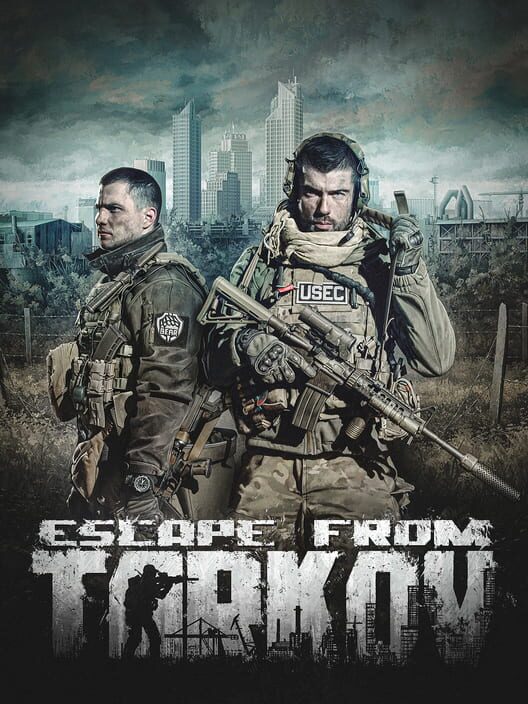
No game has ever made our palms sweat quite like Escape from Tarkov. After more than seven years in beta — a period that saw it spawn an entire genre of extraction shooters, weather multiple controversies, and build one of gaming's most passionately divided communities — Battlestate Games has finally stamped "1.0" on what might be the most punishing multiplayer experience ever created. The full release of Escape from Tarkov is simultaneously the best and most frustrating version of the game we've ever played. It rewards patience, knowledge, and nerve with moments of pure adrenaline that no other shooter can match, but it also demands a level of commitment and tolerance for frustration that will send many players running back to more forgiving fare. This is not a game for everyone, and it has never pretended to be.
Overview
For the uninitiated, Escape from Tarkov is a hardcore extraction shooter set in the fictional Norvinsk region of Russia, where political conflict has transformed the area into a lawless warzone. Players take on the role of private military contractors who must raid dangerous locations, scavenge for weapons, ammunition, medical supplies, and valuable items, then extract safely before time runs out or other players — or AI combatants — gun them down. Death means losing everything you brought into the raid, creating a risk-reward dynamic that makes every decision feel monumental.
Battlestate Games, the Russian-founded studio behind the project, has been developing Tarkov since 2012 and selling access since 2017. The journey to version 1.0 has been marked by periods of incredible growth, significant controversy — most notably the Unheard Edition debacle — and an ever-expanding scope that sometimes seemed at odds with actually finishing the game. The full release brings a new story-driven mode called "Passages," a reworked quest system, improved AI, and various quality-of-life enhancements. Whether these additions are enough to address the game's long-standing issues is the central question of this review.
Gameplay and Mechanics
At its core, Tarkov's gameplay loop remains brilliantly tense. You start each raid in your hideout, choosing your loadout from your stash of accumulated gear. Every item has weight, every magazine must be manually loaded with individual rounds, and your character's physical condition — hydration, energy, health across individual body parts — must be monitored. You select a map, choose an insertion point, and spawn into a shared instance with other players and AI Scavs. From the moment your boots hit the ground, every sound matters. Footsteps on different surfaces produce distinct audio signatures. Distant gunshots tell stories about engagements happening across the map. The rustle of a bush nearby could be wind or it could be the last thing you hear before a bullet finds your skull.
The gunplay in Tarkov remains unmatched in the shooter genre. Weapons behave with a realism that borders on simulation — ballistics account for bullet drop, penetration values, ricochet chances, and fragmentation probability. The weapon modding system is absurdly deep, allowing you to customize every component of a firearm from the barrel and handguard to the stock, grip, muzzle device, optics, and tactical attachments. There are hundreds of weapons and thousands of modification combinations, and understanding how different configurations affect recoil patterns, ergonomics, and handling speed is a game within the game itself. Firefights are brutal and decisive. Time-to-kill is extremely fast if ammunition penetrates armor, but heavily armored players can sometimes shrug off multiple rounds of lower-tier ammo. This creates an asymmetric dynamic where a well-geared veteran can dominate encounters against less-equipped players, which is both the thrill and the frustration of Tarkov's economy.
The new Passages story mode is the headline addition for 1.0. Rather than the disconnected task system of the beta, Passages provides a narrative throughline with voiced dialogue, scripted events, and branching quest paths. It does a better job of guiding new players through Tarkov's systems than anything that came before, introducing maps, mechanics, and the game's lore in a more structured way. However, it remains an addition layered on top of the core raid experience rather than a transformation of it. Veterans will appreciate the lore context but will likely burn through the story content quickly and return to the core loop of raid, loot, extract, repeat.
Presentation
Visually, Tarkov has improved substantially over its beta years. The Unity engine is being pushed hard, and while it still can't compete with the cutting-edge fidelity of Unreal Engine 5 titles, the environments are detailed and atmospheric. Maps like Streets of Tarkov are dense urban environments filled with explorable interiors, while the forested expanses of Woods and Shoreline create tension through long sightlines and natural cover. Lighting has been significantly improved in the 1.0 build, with more natural shadows and improved indoor illumination. Character models and animations are good if not exceptional, and the first-person weapon animations remain some of the best in the industry — the tactile feel of checking a magazine, chambering a round, or performing a medical procedure sells the immersion completely.
Audio deserves special mention because it is both a strength and a weakness. Positional audio is critical in Tarkov, and the game's sound engine delivers impressively detailed environmental audio. You can identify surfaces, estimate distances, and locate threats through sound alone. However, the vertical audio — distinguishing between sounds above and below you — remains inconsistent, leading to occasional moments of confusion in multi-story buildings. The ambient soundscape is excellent, creating genuine unease even when no enemies are present.
Content and Value
The 1.0 release of Tarkov is priced at $44.99 for the standard edition, which provides access to all maps, the Passages story mode, and the full gameplay experience. Higher-priced editions offer larger starting stashes and additional in-game items, which brings us to the elephant in the room: the Unheard Edition controversy. In 2024, Battlestate released a $250 premium edition that included exclusive features previously promised to existing supporters, including a co-op PvE mode. The backlash was severe and damaged community trust significantly. While Battlestate has since made some concessions, the perception of pay-to-advantage persists and colors the full release.
In terms of raw content, Tarkov is enormous. Multiple sprawling maps, hundreds of weapons, thousands of items, dozens of quest lines, a hideout base-building system, a flea market player economy, and the wipe cycle that periodically resets progress all contribute to a game that can consume thousands of hours. The issue has never been the amount of content but rather accessibility. Tarkov still does not adequately teach its mechanics, and the wiki remains an essential third-party resource. For the asking price, the value proposition is strong — if you can handle the commitment required to get good at it.
What Works and What Does Not
What works in Tarkov is everything that has always worked: the unparalleled tension of the extraction loop, the most realistic gunplay in gaming, the deep weapon modding, and the risk-reward economy that makes every successful extraction feel like a genuine triumph. The Passages story mode is a welcome narrative addition, and the general polish of the 1.0 build represents the best state the game has ever been in. The AI has been noticeably improved, with Scavs and bosses behaving more dynamically and unpredictably.
What doesn't work is harder to forgive after seven years of development. Netcode remains inconsistent — desync, where your client and the server disagree about positions and actions, still results in deaths that feel illegitimate. The game requires an enormous time investment to be competitive, and the gap between casual and dedicated players grows wider every wipe cycle. The edition controversy has left a lasting stain on the community's relationship with Battlestate. And the learning curve is less a curve and more a cliff face, with the game offering minimal guidance for the dozens of interacting systems new players must master.
Pros
- Unmatched gunplay realism and weapon feel
- Tension and risk create unforgettable moments
- Deep weapon modding system with incredible customization
- Story mode is a welcome addition for newcomers and lore fans
Cons
- Edition controversy significantly damaged community trust
- Extreme learning curve with minimal in-game guidance
- Netcode still inconsistent after years of development
- Time commitment required is enormous and can feel exclusionary
Final Verdict
Escape from Tarkov's 1.0 release is the definitive version of a game that has been shaping the shooter landscape for nearly a decade. It offers an extraction experience that remains unmatched in its tension, depth, and realism, and the addition of the Passages story mode provides a more welcoming on-ramp for newcomers even if the overall learning curve remains severe. However, it arrives carrying the weight of years of community frustration — the edition controversy, the persistent netcode issues, and the demanding time commitment prevent it from achieving the greatness its core mechanics deserve. For those who already love Tarkov, 1.0 is the best it has ever been. For those on the fence, understand what you're getting into: this is a game that asks everything from its players and rewards them with experiences no other shooter can provide. Just be prepared for the cost — not just the price tag, but the hundreds of hours it takes to truly understand what Tarkov is.