Opening Hook
There is a point in every long-running live-service game where reinvention stops feeling optional and starts feeling desperate. Fortnite has danced on this line for years, layering collaboration after collaboration and mechanical overhaul after mechanical overhaul onto what was once a simple last-one-standing battle royale. With Chapter 6, Epic Games has made its boldest thematic leap yet, transporting its island to a dazzling feudal-Japan-meets-cyberpunk setting that drips with visual personality. The question is whether a gorgeous new coat of paint and a handful of clever traversal additions are enough to justify the ongoing attention of a playerbase that has, in many ways, outgrown the very concept the game pioneered. After spending dozens of hours on the new island, our answer is a cautious but genuine yes — with some serious asterisks attached.
Overview
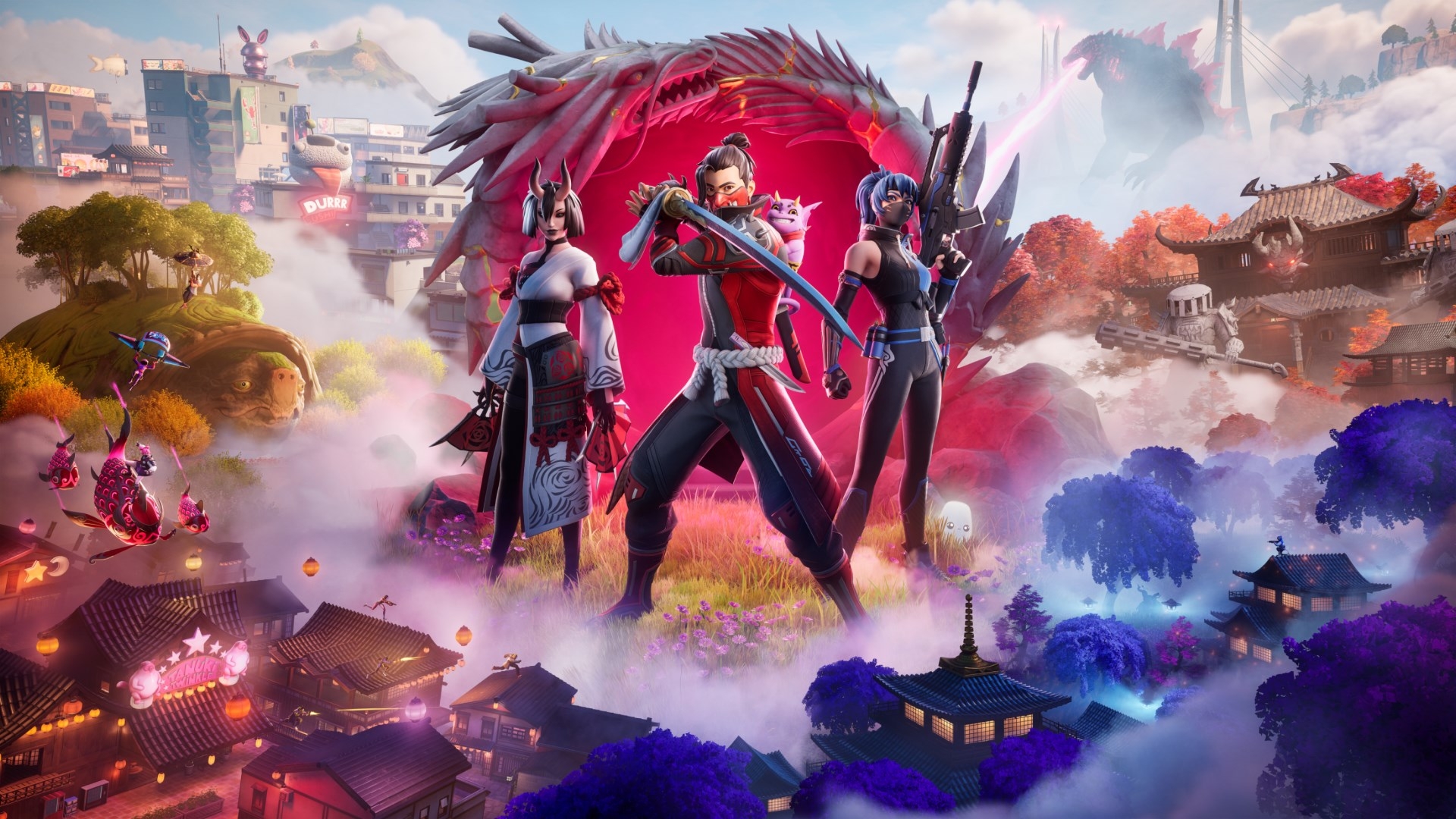
Fortnite Chapter 6 launched in December 2024 and continues to roll out seasonal updates into 2025. The centrepiece is a completely redesigned map inspired by Japanese architecture, mythology, and aesthetics. Cherry blossom forests blanket rolling hillsides, pagoda-style structures punctuate snowy mountain peaks, and neon-soaked villages feel ripped from a Shibuya fever dream. It is, without reservation, the most visually cohesive and strikingly beautiful map Epic has ever produced. Beneath the surface, Epic has also introduced new movement mechanics — wall-running, a dodge-roll, and grapple kunai — that push Fortnite's mobility in a direction that feels distinctly more action-game than building-sim. Building itself remains in the game but feels increasingly sidelined, a conscious design decision that will thrill some and frustrate others. Cross-platform play ties together PC, PS5, Xbox Series X, the new Nintendo Switch 2, and mobile devices, ensuring that the player pool stays enormous.
Gameplay and Mechanics
The most immediately noticeable change in Chapter 6 is how you move. The new wall-running system lets you sprint along any vertical surface for a few seconds, opening up vertical combat encounters that feel dramatically different from anything Fortnite has offered before. Combined with the dodge-roll — a quick lateral burst that grants a brief window of damage reduction — firefights now have a fluidity that echoes arena shooters more than the traditional box-fight meta. The grapple kunai, a limited-use traversal item found as floor loot, lets you zip across gaps and up cliffs with a satisfying snap, turning the mountainous Japanese terrain into a playground of vertical possibilities. It all works remarkably well. The skill expression these mechanics enable is genuinely exciting; watching a good player chain a wall-run into a dodge-roll into a mid-air shotgun flick is the kind of clip-worthy moment that keeps Fortnite culturally relevant.
But this is where the double-edged sword reveals itself. The new mechanics widen the skill gap considerably. Casual players — and there are still millions of them — will find themselves outmaneuvered by veterans who have already mastered wall-run peek timings and dodge-roll cancel techniques. Epic's skill-based matchmaking (SBMM) is supposed to prevent this, but in practice, lobby variance remains enormous. We regularly encountered matches where the first two minutes felt like a relaxed loot-and-explore session, only for the final circles to devolve into sweaty build-and-edit battles against players who clearly belong in a higher bracket. The Zero Build mode helps alleviate this somewhat, and we would argue it has become the definitive way to enjoy Fortnite casually in 2025, but the core Battle Royale mode still struggles with the tension between accessibility and competitive depth.
The weapon pool has been refreshed with thematic additions — katanas function as a melee-focused close-range option with a satisfying dash attack, while the new burst SMG fills the gap left by the vaulted Stinger. Loot distribution feels balanced, though we noticed an overabundance of sniper rifles in mountain biomes that occasionally makes long-range engagements feel tedious rather than tactical. The Medallion system from previous chapters has been refined into a Relic system, where defeating certain mini-bosses scattered across the map grants you powerful but temporary buffs. It is a smart evolution that gives matches a PvE layer without feeling mandatory.
Presentation
This is Fortnite at its visual peak. The Japanese-themed island is nothing short of stunning. Epic's art team has gone all-in on environmental storytelling: bamboo forests sway in real-time wind simulations, hot spring pools emit soft particle-effect steam, and the transition from snowy mountain peaks to neon-lit coastal towns feels seamless and organic. The Unreal Engine 5 upgrades that have been trickling into Fortnite since Chapter 4 are fully on display here — Nanite geometry gives cliffside temples a level of detail that would have been unthinkable in the game's early years, and Lumen-powered global illumination makes sunset firefights look genuinely cinematic. The audio design deserves praise as well. A new ambient soundtrack blends traditional Japanese instrumentation with electronic beats, and the spatial audio improvements make tracking enemy footsteps through multi-story pagodas significantly more reliable. On the performance side, the game runs at a locked 60fps on current-gen consoles and scales well on lower-end PCs, though the Nintendo Switch 2 version — while impressive for the hardware — does suffer from noticeable LOD pop-in during high-speed traversal.
Content and Value
As a free-to-play game, the raw volume of content in Fortnite Chapter 6 is almost absurd. The Battle Royale mode alone would justify the download, but Epic continues to bundle in LEGO Fortnite, Rocket Racing, Fortnite Festival, and a seemingly infinite library of UEFN (Unreal Editor for Fortnite) community creations. UEFN has matured significantly since its debut, and the quality of user-generated content now rivals — and sometimes surpasses — official offerings. We spent hours in community-made horror maps, racing circuits, and RPG adventures that felt like entirely separate games. The Battle Pass, priced at roughly 950 V-Bucks (around $8), offers the usual mix of skins, emotes, and cosmetic rewards. The Japanese aesthetic carries through with samurai-themed outfits and mythological creature back-blings that are genuinely appealing. However, the Battle Pass grind remains a point of contention. Completing all tiers without purchasing level skips requires a significant time investment, and the FOMO-driven weekly quest system feels increasingly manipulative. The item shop continues its relentless cycle of licensed collaborations — we have seen everything from Naruto to the latest Marvel crossover — and while these generate undeniable excitement, they also contribute to a growing sense that Fortnite's original identity has been diluted almost beyond recognition.
What Works and What Does Not
What works is Epic's sheer ambition. The Japanese map is a masterclass in thematic world-building for a competitive multiplayer game. The new movement mechanics are the most meaningful gameplay evolution Fortnite has seen in years. UEFN continues to democratize game creation in ways that are genuinely inspiring. Cross-platform play, for all its matchmaking headaches, means you can always find a game in seconds. What does not work is the persistent matchmaking inconsistency that throws casual players into lobbies where they have no business being. The Battle Pass grind has crossed the line from rewarding to punishing. And the identity crisis — is Fortnite a battle royale? A metaverse platform? A collaboration delivery vehicle? — continues to muddy what should be a clear, compelling pitch to new players.
Pros
- Constantly evolving content
- Japanese map is gorgeous
- UEFN creative tools are incredible
- Cross-platform is seamless
Cons
- Skill gap is enormous
- Sweaty lobby matchmaking
- Battle Pass grind is real
- Original identity has blurred
Final Verdict
Fortnite Chapter 6 is a testament to Epic Games' unmatched ability to reinvent a game that, by all rights, should have faded into irrelevance years ago. The Japanese-inspired island is the best map in Fortnite history, the new mobility mechanics inject genuine freshness into combat, and the UEFN ecosystem has transformed Fortnite into something far bigger than a battle royale. But the cracks are showing. Matchmaking remains frustrating for the casual majority, the Battle Pass economy demands more time than respect, and the relentless pace of collaborations has left the game feeling less like a cohesive vision and more like a brand delivery platform. For returning players, Chapter 6 offers more than enough reasons to drop back in. For newcomers, the sheer volume of content can be as overwhelming as it is impressive. Fortnite remains one of the most important games in the industry — we just wish it remembered what made it special in the first place.