Opening Hook
The first time we stumbled into one of Once Human's Deviation zones — warped pockets of reality where cosmic horrors twist the landscape into impossible shapes — we stopped running from the creatures chasing us and just stared. A school building had been folded in on itself like origami, its hallways spiraling into a vortex of desks and chalkboards suspended in mid-air, while something massive and incomprehensible pulsed at its center. It was genuinely unsettling and entirely unlike anything we had seen in the survival genre. Once Human is full of moments like this, where its cosmic horror setting elevates the familiar survival formula into something that feels fresh and strange. The tragedy is that between those moments of wonder, you spend an awful lot of time grinding repetitive tasks, wrestling with performance issues, and debating whether the game's controversial seasonal wipe structure respects your time. Starry Studio and NetEase Games have built something ambitious and occasionally brilliant, but the execution cannot always keep pace with the vision.
Overview
Once Human is a free-to-play open-world survival shooter developed by Starry Studio and published by NetEase Games. The game launched in mid-2024 and has been continuously updated since, with a mobile port expanding its reach in early 2025. Set in a post-apocalyptic world ravaged by a mysterious cosmic event called the Stardust, Once Human tasks players with surviving in an open world filled with mutated creatures, resource scarcity, and the ever-present threat of other players. What distinguishes it from the crowded survival genre is its Lovecraftian cosmic horror theming and its Deviant system — collectible mutated creatures that serve as both companions and base decorations, essentially giving the game a creature-collecting layer on top of its survival foundation.
The game operates on a seasonal server model where progress is periodically wiped and new scenarios are introduced, a design choice that has proven deeply divisive among the player base. With regular content updates, cross-platform aspirations, and a growing community, Once Human is clearly NetEase's bid for a long-term live-service survival game. Whether that bid succeeds depends largely on how the developers address the significant friction points that currently hold the experience back.
Gameplay and Mechanics
Once Human's survival mechanics will be immediately recognizable to anyone who has played Rust, DayZ, or similar titles. You gather resources, craft tools and weapons, build a base, manage hunger and thirst, and try not to get killed by the environment, AI enemies, or other players. The crafting system is extensive, with a sprawling tech tree that unlocks progressively more advanced materials, structures, and equipment. Base building is one of the game's genuine strengths — the system is flexible enough to create impressive structures, with modular snap-together pieces that allow for creative multi-story designs, fortified compounds, and even aesthetic projects that serve no practical purpose beyond looking cool.
Combat is serviceable but unremarkable. The gunplay feels adequate — weapons have distinct handling characteristics and the shooting mechanics are functional — but it lacks the crispness and feedback that dedicated shooters provide. Enemies range from standard zombie-like infected to massive Deviation bosses that require group coordination to take down, and these boss encounters represent some of the game's highest highs. The Deviation bosses are visually spectacular, with eldritch designs that lean heavily into the cosmic horror aesthetic, and the fights demand genuine teamwork and preparation. Regular enemy encounters, however, can feel repetitive, with limited AI behaviors that reduce most non-boss combat to straightforward kiting and shooting.
The Deviant system is Once Human's most distinctive feature. Throughout the world, you can capture mutated creatures called Deviants, each with unique abilities and appearances. Some serve practical purposes — a Deviant that functions as a mobile storage unit, or one that generates electricity for your base — while others are primarily cosmetic companions that follow you around the world. The creature designs are genuinely creative, blending body horror with unexpected whimsy in ways that feel uniquely Once Human. Collecting and deploying Deviants adds a layer of progression and personality that the genre typically lacks, and it gives players a reason to explore beyond pure resource gathering.
The open world itself is large and varied, with distinct biomes ranging from overgrown suburbs to crystalline wastelands to dense fungal forests. Exploration is rewarded with lore fragments, hidden caches, Deviant encounters, and Deviation zones — instanced dungeon-like areas where the cosmic horror element is cranked to maximum. These zones are the game's centerpiece experiences, offering puzzle-like encounters and environmental storytelling that far exceeds what you typically find in survival games. The problem is getting between them: traversal can be tedious, fast travel is limited, and the spaces between points of interest are often filled with repetitive enemy spawns and resource nodes that feel more like busywork than meaningful gameplay.
Presentation
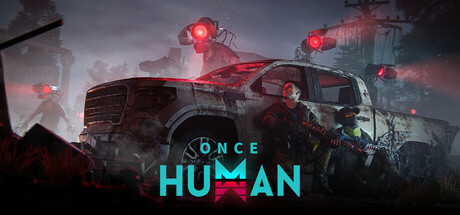
Once Human's art direction is its secret weapon. The cosmic horror aesthetic permeates everything from the twisted architecture of Deviation zones to the unsettling designs of mutated creatures, creating an atmosphere that is genuinely distinct in the survival genre. The world has a sense of wrongness that goes beyond simple post-apocalyptic decay — buildings bend at impossible angles, organic growths pulse with alien light, and the sky occasionally ripples with colors that feel fundamentally off. When the game commits to its horror identity, it is visually arresting.
Technically, however, Once Human has significant problems. Performance is inconsistent even on capable hardware, with frame rate drops in densely built areas and during large-scale events. Pop-in is noticeable, texture streaming can be sluggish, and the game's rendering of distant objects leaves much to be desired. The mobile port, while impressive in scope, compounds these issues with additional visual compromises and occasional stability problems. The user interface is functional but cluttered, with too many overlapping systems, currencies, and menus competing for screen space. Sound design is a mixed bag — the ambient audio in Deviation zones is genuinely unsettling and effective, but weapon sounds are flat and lack impact, undermining the combat experience. The musical score leans into eerie, atmospheric compositions that complement the setting beautifully, even if individual tracks are not particularly memorable on their own.
Content and Value
As a free-to-play game, Once Human offers a staggering amount of content. The open world is genuinely massive, with hundreds of hours of potential gameplay across base building, exploration, Deviant collecting, PvE dungeons, PvP encounters, and seasonal events. The regular content updates from Starry Studio have introduced new biomes, Deviants, weapons, and story scenarios, demonstrating a commitment to keeping the experience fresh.
The elephant in the room is the seasonal wipe system. At the end of each scenario season, server progress is reset — bases are demolished, inventories are cleared, and characters return to a fresh start. Some progression carries over through a persistent account system, but the bulk of your in-game work is erased. This design is intended to keep the game feeling fresh, prevent established players from becoming too entrenched, and allow the developers to introduce new gameplay scenarios each season. In practice, it is deeply controversial. Many players — ourselves included — find it difficult to invest dozens of hours into base building and resource accumulation knowing it will all be wiped in a few weeks. Others argue it creates a natural rhythm and prevents the stagnation that plagues persistent survival games. Your tolerance for this system will likely determine whether Once Human becomes a long-term favorite or a frustrating exercise in impermanence.
PvP balance remains an ongoing concern. While PvE-focused servers exist, the game's PvP modes can feel punishing for solo players and smaller groups, with organized clans dominating through numbers and coordination rather than skill. NetEase has made efforts to introduce more equitable PvP scenarios, but the fundamental tension between hardcore and casual players has not been fully resolved.
What Works and What Does Not
Once Human's greatest strength is its setting. The cosmic horror survival concept is genuinely inspired, and the Deviation zones, Deviant creature system, and atmospheric world design represent the best version of what this game can be. Base building is deep and satisfying, the content volume is impressive for a free-to-play title, and the regular updates suggest a developer that is actively listening and iterating. When you are deep in a Deviation zone, fighting an eldritch boss alongside your squad with Deviants providing support, Once Human delivers an experience no other survival game matches.
What drags the experience down is everything surrounding those peak moments. The performance issues are persistent and frustrating, particularly for players on lower-end hardware or mobile devices. The mid-game grind, once the initial wonder of exploration fades, becomes repetitive and tedious. The seasonal wipe system, whatever its design merits, creates a psychological barrier to long-term investment that some players will never overcome. PvP balance remains a work in progress, and the monetization, while not aggressively pay-to-win, pushes cosmetics and convenience items with a frequency that can feel grating. There is a great game buried in Once Human, but it is currently obscured by rough edges that the developers need to continue sanding down.
Pros
- Unique cosmic horror setting
- Deep base building
- Deviant creatures are creative
- Regular seasonal resets keep things fresh
Cons
- Performance issues
- PvP balance problems
- Seasonal wipe controversy
- Repetitive mid-game grind
Final Verdict
Once Human is a game at war with itself. Its cosmic horror setting is genuinely inspired, offering a visual and thematic identity that stands apart from every other survival game on the market. The Deviant creature system is clever, the base building is satisfying, and the Deviation zones are some of the most creative PvE content we have experienced in the genre. But these highs are offset by persistent performance problems, a mid-game grind that tests patience, PvP balance issues that frustrate casual players, and a seasonal wipe system that will be a dealbreaker for many. If you are drawn to the cosmic horror setting and enjoy survival games that prioritize seasonal freshness over permanent progression, Once Human offers a unique and generous free-to-play experience worth exploring. If you prefer to build something lasting, or if you demand technical polish from your games, you may find the frustrations outweigh the wonder. We give Once Human a 6.9 out of 10 — a good game with a great game trying to claw its way out from beneath layers of rough edges and questionable design choices.