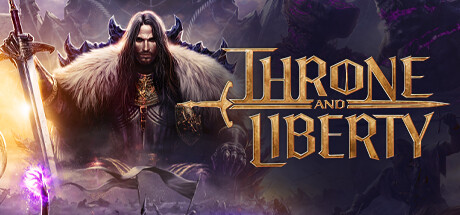
Opening Hook
We were soaring through a thunderstorm as an eagle, diving through rain-lashed clouds toward a castle siege below, when we shapeshifted back into human form mid-air, landed atop the battlements, and plunged our greatsword into a defending player. For about five seconds, Throne and Liberty was the most exciting MMO we had ever played. Then we spent the next hour grinding the same dungeon for a gear upgrade that never dropped, and the spell was thoroughly broken. That tension — between moments of genuine spectacle and stretches of numbing familiarity — defines NCSoft's ambitious but uneven MMORPG. Published in the West by Amazon Games, Throne and Liberty wants desperately to be the next great MMO. It lands somewhere closer to a competent one, which in a genre starving for new blood might be enough for some players, but falls short of the transformation the genre needs.
Overview
Throne and Liberty began its life as a sequel to Lineage, NCSoft's foundational Korean MMO franchise. Over its lengthy development, the game underwent multiple reinventions before emerging as a standalone title that maintains spiritual connections to Lineage while attempting to modernize the formula for a global audience. Amazon Games — fresh from their experience publishing Lost Ark in the West — took on publishing duties, handling localization, server infrastructure, and the Western business model. The game launched globally in late 2024 across PC, PlayStation 5, and Xbox Series X|S as a free-to-play title with cross-platform play.
The setting is Solisium, a high-fantasy world where an ancient darkness threatens the land and rival factions war for control of a powerful throne. If that premise sounds generic, that's because it is — Throne and Liberty's narrative framework draws from the broadest possible fantasy archetypes without adding a distinctive spin. You play as a customizable hero who allies with various factions, completes quests to grow stronger, and eventually participates in the large-scale PvP conflicts that represent the game's primary endgame ambition. The journey from level one to endgame takes roughly 30-40 hours if you follow the main story, with substantially more content available through side quests, dungeons, and the extensive guild system.
Gameplay and Mechanics
Combat in Throne and Liberty uses an action-oriented system with manual targeting, dodge mechanics, and active blocking. Your character's fighting style is determined by your equipped weapon pair — you carry two weapons and can swap between them mid-combat, creating hybrid playstyles. A sword-and-shield paired with a greatsword creates a tank-DPS hybrid, while a wand paired with a staff produces a versatile caster. This dual-weapon system is one of the game's better ideas, encouraging experimentation and allowing players to adapt their role depending on the situation without maintaining entirely separate gear sets. The combat itself feels responsive if unremarkable — animation quality is good, abilities have satisfying impact, and the pace of encounters keeps you engaged during dungeons and world bosses.
The shapeshifting system is Throne and Liberty's most distinctive feature. Throughout the open world, players can transform into various animals to traverse the environment. Eagles allow aerial flight, fish let you swim through waterways, and wolves provide rapid ground movement. These transformations aren't just cosmetic — they fundamentally change how you navigate and interact with the world. During siege events, the ability to fly over walls, swim through underground channels, or sprint across open ground as a wolf pack creates dynamic approaches to objectives that feel genuinely fresh. Weather and time-of-day systems affect which transformations are available and how the environment behaves, adding a layer of strategic timing to exploration and PvP that we haven't seen in other MMOs.
Dungeon design is solid if formulaic. Instanced content features well-designed boss encounters with clear mechanics, escalating complexity, and satisfying loot tables. The open-world dungeons — shared spaces where multiple groups might compete for resources and bosses — create organic PvP flashpoints that capture some of the old-school MMO magic of contested territory. However, the gear progression system leans heavily on randomized upgrades and enhancement, where upgrading equipment requires materials and carries a chance of failure. This RNG-based progression is a common feature of Korean MMO design that has historically frustrated Western audiences, and Throne and Liberty's implementation is no exception. Spending hours farming materials only to watch an upgrade fail repeatedly is demoralizing, and it's here that the game's monetization concerns begin to surface.
Presentation
Visually, Throne and Liberty is an attractive game built on Unreal Engine 4. Character models are detailed with extensive customization options, environments are large and varied — from lush forests to volcanic wastelands to elaborate castle cities — and the weather system creates genuinely impressive visual moments. Watching a thunderstorm roll across the battlefield during a siege, with lightning illuminating hundreds of players clashing on the walls, is a sight that few games can match. Draw distances are impressive, and the world feels suitably massive when you take flight as an eagle and survey the landscape below.
However, the art direction lacks a distinctive identity. Everything in Throne and Liberty looks competent, polished, and utterly familiar. The fantasy architecture could be from any of a dozen MMOs. The character designs, while technically well-made, rely on standard fantasy tropes without the stylistic flair of a Final Fantasy XIV or the painterly charm of a Guild Wars 2. The UI is functional and clean, handling the complexity of MMO systems without becoming overwhelming, though some menus — particularly the gear enhancement interface — could use better clarity. Sound design is adequate, with a sweeping orchestral score that does its job without producing any memorable themes. Voice acting in the main storyline ranges from serviceable to stiff, and the localization occasionally stumbles with awkward phrasing.
Content and Value
As a free-to-play MMO, Throne and Liberty's value proposition depends entirely on how you feel about its monetization. The core content — the story campaign, dungeons, open-world activities, PvP, and guild systems — is accessible without paying. The game is generous with its initial progression, providing enough resources and gear through normal play to reach the endgame without feeling throttled. The problems emerge at the endgame ceiling, where the RNG-heavy gear enhancement system creates a natural friction point that the cash shop is conveniently positioned to smooth over.
Monetization includes a premium battle pass, cosmetic items, and various convenience items that accelerate progression. The concern — voiced loudly by the community since launch — is that some purchasable items provide tangible gameplay advantages, particularly in the context of gear enhancement. Purchasing materials, protection charms that prevent upgrade failures, and other enhancement aids creates a situation where spending players progress faster and hit harder in PvP than free players who invest the same amount of time. In a game where large-scale PvP is the marquee feature, this pay-to-advantage dynamic undermines competitive integrity. Amazon Games has made adjustments to the cash shop since launch in response to community feedback, but the fundamental structure remains tilted toward paying players in ways that feel uncomfortable.
Cross-platform support is a meaningful positive, allowing PC, PlayStation, and Xbox players to share servers and play together. The server infrastructure has been generally stable, though population distribution across servers has been uneven, with some servers thriving and others struggling to maintain the critical mass needed for large-scale PvP events. Server merge and transfer options have been discussed but not fully implemented, leaving players on quieter servers with a diminished experience.
What Works and What Does Not
The siege battles work. When hundreds of players converge on a castle, transforming between combat and animal forms, utilizing weather conditions, and coordinating through guild systems, Throne and Liberty delivers on its promise of massive, dynamic PvP. The shapeshifting traversal system is genuinely innovative, adding a dimension of exploration and tactical movement that other MMOs lack. The dual-weapon combat system provides welcome build flexibility. Dungeon design is competent, and the open-world shared dungeons create exciting contested spaces.
The generic fantasy setting does not work. The story is forgettable filler that serves as little more than a leveling vehicle. The art direction, while technically proficient, lacks personality. The pay-to-win concerns are real and measurable — spending players have tangible advantages in the competitive content that defines the endgame. The RNG gear enhancement system is frustrating by design, and server population inconsistency means that the game's best content — those spectacular sieges — isn't equally available to all players. And the overall feeling, despite the innovations, is one we've experienced many times before: a polished Korean MMO that offers familiar thrills without establishing a truly unique identity.
Pros
- Massive siege battles are genuinely impressive
- Shapeshifting adds unique mobility and tactical options
- Solid dungeon design with engaging boss encounters
- Cross-platform support connects the player base
Cons
- Generic fantasy setting with no distinctive identity
- Pay-to-win concerns undermine competitive integrity
- Story is forgettable and poorly localized in places
- Server population inconsistency limits best content
Final Verdict
Throne and Liberty is a competent MMORPG that does several things well without doing anything exceptionally. Its siege battles are spectacular, its shapeshifting system is genuinely innovative, and the cross-platform free-to-play model removes the barrier to entry for curious players. But it arrives in a genre that already has multiple excellent free-to-play options, and it fails to distinguish itself from the pack in the ways that matter most — world-building, storytelling, and fair competitive systems. The pay-to-win shadow hanging over the endgame PvP is particularly damaging for a game that positions large-scale conflict as its primary selling point. We can recommend Throne and Liberty as a free diversion for MMO fans looking for something new to explore, particularly those who enjoy PvP-focused endgames. But we can't recommend it as a long-term home, not when the monetization structure asks you to spend to compete and the world itself gives you so little reason to care about the conflict you're fighting for. There's a good game here, occasionally even a great one, but it's buried under familiar trappings and troubling business decisions.