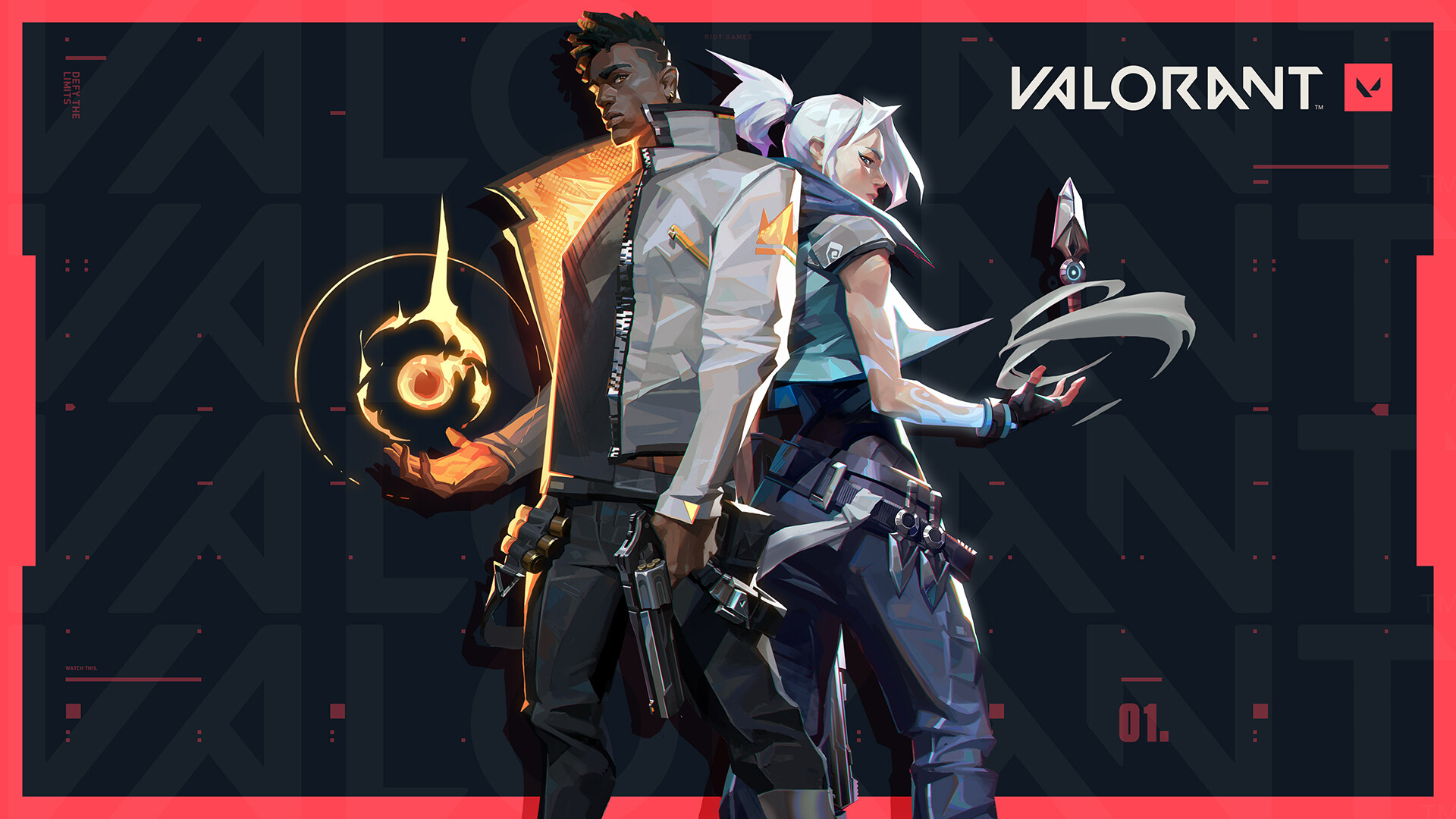
Opening Hook
Five years after its launch, Valorant has accomplished something extraordinarily rare in competitive gaming: it has not only maintained its relevance but actively expanded its audience without alienating the hardcore community that built it. In a genre littered with the corpses of would-be Counter-Strike killers, Riot Games' tactical shooter has carved out its own identity so thoroughly that comparing it to Valve's venerable franchise feels reductive. With its 2025 updates — including a fully realized console launch, new agents that reshape the meta in fascinating ways, and continued refinements to its industry-leading anti-cheat system — Valorant makes a compelling case that it is not merely one of the best competitive shooters available, but the single best one for players who want a modern, well-supported experience. The road here has not been without bumps, but standing in early 2025, the view from the top is undeniably impressive.
Overview
For the uninitiated, Valorant is a five-versus-five tactical shooter where teams alternate between attacking and defending over a series of rounds, purchasing weapons and abilities at the start of each. What separates it from Counter-Strike is the agent system: each player selects a character with a unique kit of abilities, ranging from smokes and flashes to walls, drones, and healing fields. The interplay between precise gunplay and ability usage creates a tactical layer that rewards both mechanical skill and strategic thinking. Developed and published by Riot Games, Valorant launched on PC in 2020 and has since grown into one of the most-watched esports titles in the world. The 2025 season represents a pivotal moment: Riot has expanded to console platforms with PS5 and Xbox Series X versions, introduced several new agents, overhauled its ranked system, and continued to push the boundaries of competitive integrity with its Vanguard anti-cheat technology.
Gameplay and Mechanics
Valorant's gunplay remains its bedrock, and it is as crisp and satisfying in 2025 as it has ever been. The shooting model rewards precision above all else — standing still, aiming at head level, and tapping or bursting is the path to victory, and there are no shortcuts. Spray patterns are learnable but punishing, movement accuracy is minimal, and the time-to-kill is brutally fast. This design philosophy ensures that every duel feels consequential, every round carries weight, and every clutch play earns its adrenaline. The agent roster has swelled to over twenty-five characters, and remarkably, Riot has managed to avoid the power-creep trap that plagues so many ability-based games. The newest additions — including Tejo, a Colombian initiator whose concussive darts create controlled chaos on bombsites, and Vyse, a sentinel whose metal-controlling abilities lock down flanks in visually spectacular fashion — slot into the meta without breaking it. Each new agent feels like a genuine expansion of tactical possibility rather than a power escalation, and that restraint deserves recognition.
The console launch, which many feared would dilute the PC experience, has been handled with remarkable care. Console players exist in their own matchmaking pool by default, with cross-play available only in unranked modes. The gyroscope aiming option on PS5 offers a surprisingly viable middle ground between stick and mouse precision, and Riot has tuned ability interactions to feel responsive on a controller without compromising their tactical depth. It is not a perfect translation — some agents with high micro-demand, like Jett and Raze, feel noticeably harder to pilot on a gamepad — but it is far more successful than we expected.
The ranked system received a significant overhaul in early 2025, introducing a more transparent MMR display and tightening the variance between visible rank and hidden rating. The result is a competitive ladder that feels more honest and less frustrating to climb. Premier, Valorant's team-based competitive mode, has also matured into a genuinely compelling alternative to solo queue, offering organized five-stack play with league-style scheduling that bridges the gap between ranked grind and full esports commitment. The one persistent pain point remains smurfing. Despite Riot's efforts to detect and penalize alternate accounts, the problem endures, particularly in the mid-ranks where a single smurf can single-handedly decide a match. It is the one area where Vanguard's otherwise exemplary detection capabilities seem frustratingly limited.
Presentation
Valorant has never been a graphical showcase, and that is by design. Its clean, stylized art direction prioritizes competitive clarity above all else — character silhouettes are instantly readable, ability effects are color-coded for friend-or-foe identification, and map geometry is designed to eliminate visual noise. The 2025 map additions continue this philosophy while pushing artistic ambition. Abyss, a map set on narrow platforms over a bottomless void, is both a visual stunner and a brilliant gameplay experiment that punishes poor positioning with literal death-by-falling. The UI has seen incremental improvements that add up to a meaningfully better experience: the buy menu is snappier, the minimap is more customizable, and the end-of-round economy breakdown provides tactical information that was previously only available through third-party tools. On the audio front, Valorant's sound design remains best-in-class for competitive shooters, with directional audio that is accurate enough to make sound-based plays a reliable strategy. Agent voice lines add personality without becoming distracting, and the music that accompanies clutch situations builds tension without overpowering callouts. Performance is outstanding across the board — the game runs at high frame rates on modest hardware, which remains one of its greatest competitive advantages.
Content and Value
As a free-to-play title, Valorant's value proposition is excellent with one significant caveat: skin prices. The core gameplay experience — all agents unlockable through play, all maps available to everyone, full ranked access — costs nothing. New agents can be earned through a contract system that takes roughly a week of regular play, and no gameplay advantage is locked behind a paywall. The battle pass, priced at 1000 VP (roughly $10), offers a reasonable collection of cosmetics and is completable without excessive grinding. However, the premium weapon skin market remains eye-wateringly expensive. Individual skin bundles routinely cost $50-$70, and the most coveted collections — complete with custom animations, sounds, and finisher effects — can push past $100. These skins are undeniably high-quality, with production values that rival anything in the free-to-play space, but the pricing alienates players who want to engage with the cosmetic ecosystem without dropping triple-A game money on a single weapon skin. Riot has introduced a few more affordable options in 2025, including a rotating selection of lower-tier skins at reduced prices, but the top end remains firmly in whale territory. The esports ecosystem surrounding Valorant is itself a form of content, with the VCT (Valorant Champions Tour) providing year-round professional competition across multiple regions. In-game integration of esports viewing, including drops and event passes, adds value for fans who follow the competitive scene.
What Works and What Does Not
What works is nearly everything that matters. The gunplay is surgical. The agent design is creative without being chaotic. The ranked system, after years of iteration, finally feels fair. The console launch expands the audience without compromising the core experience. Vanguard's anti-cheat, while invasive by some standards, delivers on its promise of near-cheat-free competitive play — a claim essentially no other shooter can make. The esports ecosystem is thriving, and Riot's commitment to long-term support is evident in every update. What does not work is the barrier to entry for truly new players. The learning curve is steep, the community can be unwelcoming, and the lack of a meaningful tutorial or guided competitive pathway means new players are often thrown into the deep end. Smurfing compounds this problem, and skin pricing continues to feel disconnected from the average player's budget.
Pros
- Best anti-cheat in the business
- New agents keep meta fresh
- Console launch was polished
- Thriving competitive scene
Cons
- High skill floor for newcomers
- Smurf problem persists
- Skin prices are steep
- Some maps are poorly received
Final Verdict
Valorant in 2025 is a game that has earned its place at the top of the competitive shooter hierarchy. Riot Games has demonstrated a level of sustained commitment to quality, balance, and competitive integrity that sets an industry standard. The console expansion opens the door to millions of new players without diluting the experience that made the game great. The agent roster offers more strategic depth than ever, and the ranked system finally respects players' time and skill in equal measure. The high skill floor and aggressive monetization remain legitimate concerns, but they are the kind of problems that come with a game confident enough in its quality to set its own terms. If you have even a passing interest in competitive shooters, Valorant is not just worth playing — it is essential. Five years in, this is a game that is still getting better, and that is perhaps the highest compliment we can pay.