Opening Hook
Warzone refuses to die, and in 2025, it might be more relevant than ever — or at least more technically impressive. The integration with the latest Call of Duty title brings Omnimovement to the battle royale space, fundamentally changing how firefights play out in ways that feel genuinely fresh for the first time in years. But with that freshness comes the familiar baggage that has defined Warzone since its inception: bloated file sizes that punish your storage, a monetization strategy that borders on parody, and an anti-cheat system that always seems one step behind the cheaters. Warzone in 2025 is a game of extraordinary highs and frustrating lows, a battle royale that can deliver the most exhilarating moments in the genre one match and leave you seething at your screen the next.
Overview
Call of Duty: Warzone has been the dominant force in the battle royale space since its 2020 debut, and the 2025 iteration represents yet another evolution of the formula. Developed by Raven Software under the Activision umbrella, this version integrates fully with Call of Duty's latest mainline entry, inheriting its weapon systems, movement mechanics, and visual engine. The headline feature is Omnimovement — a system that allows players to sprint, slide, and dive in any direction, including laterally and backward. It sounds like a minor tweak on paper but transforms engagements in practice. A new map called Avalon replaces the previous rotation, offering a dense urban environment mixed with sprawling rural terrain that caters to multiple play styles. Resurgence mode returns alongside standard battle royale, and the integration of ranked play from the mainline game gives competitive players a structured ladder to climb. Cross-platform play across PC, PS5, and Xbox Series X ensures a healthy player pool, even if the experience across platforms is not always equal.
Gameplay and Mechanics
Omnimovement is the star of the show, and we cannot overstate how much it changes the feel of Warzone. The ability to slide laterally behind cover, dive backward while firing, or sprint sideways around a corner creates a fluidity of movement that makes previous iterations feel stiff by comparison. Gunfights are more dynamic, more unpredictable, and significantly more skill-intensive. Players who master the movement system gain a tangible advantage, and the skill gap between casual and dedicated players has widened considerably as a result. Whether that is a positive depends entirely on your perspective and your willingness to put in the hours to adapt.
The new Avalon map is a strong addition that avoids the pitfalls of its predecessors. Points of interest are varied and well-distributed, preventing the congestion that plagued some earlier maps while still ensuring consistent action. The downtown area is a multi-level combat playground that rewards vertical awareness, while the surrounding countryside provides long-range engagements that favor marksman rifles and snipers. Loot distribution feels more balanced than in previous seasons, reducing the frustrating early-game scramble where one player finds a loadout drop while another is stuck with a pistol.
Resurgence mode continues to be our preferred way to play Warzone. The smaller map, faster pace, and respawn mechanics create an intensity that standard battle royale cannot match. It is more forgiving for casual players while still rewarding skilled squads, and the reduced match length makes it easier to squeeze in a few rounds without committing to the forty-minute marathon that a full battle royale can become. Weapon balancing, however, remains Warzone's Achilles heel. The meta shifts violently between patches, with certain weapons going from useless to dominant overnight. The community has grown weary of this cycle, and while Raven Software has improved their response time to egregious balance issues, the fundamental problem of reactive rather than proactive tuning persists.
Presentation
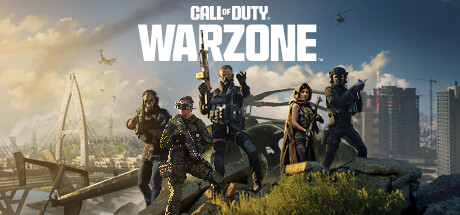
Visually, Warzone 2025 is the best-looking version of the game to date. The engine improvements from the latest Call of Duty mainline entry translate beautifully to the battle royale space, with improved lighting, more detailed textures, and environmental effects that add genuine atmosphere to matches. The destruction of a building during a cluster strike, the dust clouds from a vehicle collision, the way sunlight filters through shattered windows during the final circle — these moments are visually stunning and contribute to the cinematic quality that has always been Warzone's strength. Audio design remains excellent, with directional sound that provides critical tactical information. Footstep audio, in particular, has been improved this season, though it still occasionally fails to register in chaotic close-quarters situations. The UI is functional if unremarkable, with the loadout and menu systems feeling increasingly cluttered as more content is layered on top of the existing infrastructure. The game's file size remains absurd — north of 150GB for the full installation on PC — and while compression improvements have helped marginally, this remains a significant barrier to entry for players with limited storage.
Content and Value
As a free-to-play title, Warzone 2025 offers substantial content without requiring payment. The battle pass system provides a progression path with cosmetic rewards, and the core gameplay experience is fully accessible to non-paying players. However, the monetization deserves scrutiny. The in-game store is relentless, with pop-up ads, rotating bundles, and premium cosmetics priced at levels that feel disconnected from their actual value. Weapon blueprints, operator skins, and vehicle wraps are aggressively marketed, and while none of it is pay-to-win in the traditional sense, the constant commercial pressure diminishes the experience. The cross-platform integration with the mainline Call of Duty means that weapon progression carries over, giving players who own both games a head start that free-to-play-only users must grind to match. Ranked play adds longevity for competitive players, but the casual audience may find themselves cycling through the same modes without enough variety to sustain long-term interest. The addition of limited-time events and seasonal content keeps things fresh on a surface level, but the underlying mode structure has not meaningfully evolved since Warzone's inception.
What Works and What Doesn't
Pros
- Omnimovement is a genuine game-changer for battle royale combat
- New Avalon map is well-designed with varied engagement ranges
- Resurgence mode remains addictive and well-paced
- Cross-platform integration keeps the player pool healthy
Cons
- Massive file size continues to be a storage nightmare
- Weapon balancing whiplash between patches frustrates the community
- Anti-cheat system still struggles to keep up with cheaters
- Monetization is relentless and increasingly aggressive
Final Verdict
Call of Duty: Warzone in 2025 is a game that gets the fundamentals right while stumbling on the details. Omnimovement genuinely elevates the combat in ways that justify another year of engagement, and the new map provides a strong foundation for both casual and competitive play. Resurgence mode remains one of the best experiences in the battle royale genre, period. But the persistent issues — the bloated file size, the volatile weapon meta, the cheating problem that never quite gets solved, and the monetization that treats every menu screen as an advertising opportunity — prevent Warzone from achieving the greatness its core gameplay deserves. It is a great battle royale weighed down by decisions that prioritize revenue over player experience. If you can look past the noise, the signal is still strong. We just wish Activision would turn down the volume on everything surrounding the actual game.