Opening Hook
Obsidian Entertainment has spent the better part of two decades proving that they are among the finest narrative craftspeople in the RPG space. From Knights of the Old Republic II to Pillars of Eternity to The Outer Worlds, the studio has a gift for building worlds where words carry as much weight as swords. Avowed, their first-person action RPG set in the Pillars of Eternity universe, continues that tradition of excellent writing and meaningful player choice. But it also reveals a studio still finding its footing when it comes to the kind of visceral, moment-to-moment combat that the first-person perspective demands. Avowed is a game we deeply respect, frequently admire, and occasionally wish were something more than what it is.
Overview
Released on February 18, 2025, for Xbox Series X and PC, Avowed is set in the Living Lands, a remote frontier region within the world of Eora -- the same setting as Obsidian's acclaimed Pillars of Eternity series. You play as an envoy of the Aedyr Empire, sent to investigate a mysterious plague that is rotting the land and driving its inhabitants to madness. What begins as a diplomatic mission quickly spirals into something far more complex, as you uncover factional conflicts, ancient secrets, and questions about the nature of souls that fans of Pillars will find deeply familiar. Published by Xbox Game Studios, Avowed represents Obsidian's biggest-budget production to date, and that investment shows in the scope of its world, even if the execution does not always match the ambition.
Gameplay & Mechanics
Avowed offers a classless character system where you build your playstyle through a combination of weapon proficiencies, spell grimoires, and talent trees. You can dual-wield swords, pair a blade with a spell-casting grimoire in your off-hand, go full mage with two grimoires, or take a more traditional sword-and-shield approach. The flexibility is appreciated, and the game encourages experimentation by making respeccing easy and affordable. On paper, this is a compelling combat framework that should rival the best of the immersive sim genre.
In practice, the combat in Avowed is functional but lacks the physicality and feedback that makes first-person melee combat truly satisfying. Sword swings feel floaty, connecting with enemies without the kind of weighty impact you get from a game like Dark Messiah of Might and Magic or even Skyrim with mods. Magic fares somewhat better -- launching a fireball into a group of enemies and watching them scatter is gratifying, and the elemental interaction system (setting oil patches on fire, freezing wet enemies, electrifying water) adds tactical depth to encounters. But melee, which is the bread and butter for many builds, never quite clicks the way it should.
Where Avowed excels mechanically is in its quest design. This is Obsidian at their best -- nearly every quest offers multiple solutions, and the game tracks your decisions with a granularity that feels genuinely impressive. We completed one major quest by persuading a faction leader to step down peacefully, only to learn later that the power vacuum we created led to worse outcomes for the common people. That kind of consequence-laden design is rare and valuable, and it elevates Avowed above many of its peers in the RPG space. Your two companions (selected from a roster of four) are well-written and react dynamically to your choices, occasionally disagreeing with each other in ways that feel organic rather than scripted.
Presentation
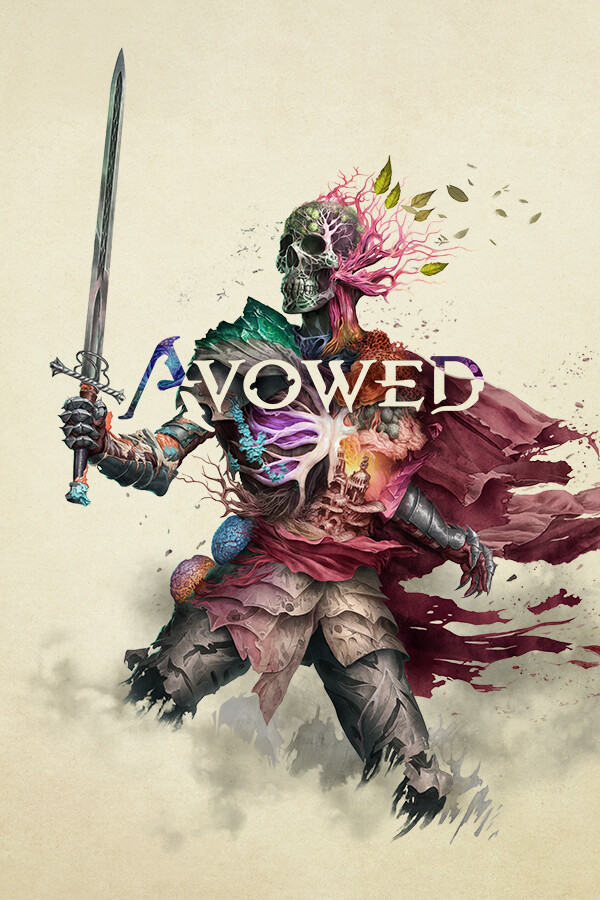
The Living Lands is a beautiful setting, rendered with a painterly art style that gives Avowed a distinctive visual identity. Lush jungles give way to crystalline caves, ancient ruins covered in bioluminescent fungi, and coastal cliffs battered by storms. The art direction is consistently strong, with each region having its own color palette and ecological identity. Character models are solid if unspectacular, and the lip-syncing during dialogue is noticeably better than Obsidian's previous efforts.
The soundtrack is atmospheric and understated, favoring ambient textures over bombastic orchestral themes. It works well in exploration but is less memorable during combat encounters, where the music tends to blend into the background. Voice acting is a mixed bag -- the main cast delivers strong performances, particularly your companions, but some secondary NPCs feel phoned in. Technically, Avowed launched with a handful of bugs, including occasional quest markers failing to update, texture pop-in during area transitions, and one crash-to-desktop that cost us about twenty minutes of progress. Nothing game-breaking, but enough to dent an otherwise polished experience.
Content & Value
At $69.99, Avowed is priced at the new standard for premium titles, and its content offering is... adequate, but perhaps not generous for that price point. The main story runs approximately 20 to 25 hours, which is short for an RPG, even accounting for the density of its quests. Completionists can stretch that to around 35 hours by pursuing all side content, companion quests, and exploration. The game does not feature a New Game Plus mode, though the branching quest design encourages a second playthrough with different choices and a different character build.
The lack of a sprawling open world is actually one of Avowed's strengths -- each zone is handcrafted and dense with meaningful content rather than padded with filler. But the trade-off is that the game feels smaller than its ambitions suggest. We wanted more of the Living Lands to explore, more factions to interact with, more time with our companions. When the credits rolled, we felt satisfied with the story but hungry for more world. That is not the worst complaint to have, but at the premium price point, we think players are right to expect a bit more.
What Works & What Doesn't
The writing is the star of the show, full stop. Obsidian has crafted a narrative with genuine philosophical depth that never loses sight of its characters or the player's agency. The companion system is excellent, the quest design is top-tier, and the setting is rich with lore that rewards curious players. The flexible class system and elemental combat interactions show real design intelligence, even if the moment-to-moment combat does not always deliver on their promise.
What holds Avowed back is the disconnect between its narrative ambition and its action game execution. The combat is the weakest link, and since you spend a significant portion of the game in combat, that weakness is hard to overlook. The game is also shorter than expected, and while the art direction is beautiful, the technical issues at launch, though minor, chip away at the immersion that the world-building works so hard to establish. Exploration, while rewarding within each zone, often feels constrained by invisible walls and linear pathways that undermine the sense of being in a true frontier wilderness.
Pros
- Excellent writing and meaningful player choices
- Deep lore built on the Pillars of Eternity universe
- Companion system works well and feels organic
- Beautiful environments with strong art direction
Cons
- Combat lacks the weight and impact it needs
- Short for an RPG at a premium price point
- Some technical issues and bugs at launch
- Exploration feels constrained by linear zone design
Final Verdict
Avowed is a good RPG that falls just short of greatness. It showcases everything Obsidian does best -- layered storytelling, consequential choices, and a world that feels lived-in and intellectually rich. If you are coming to Avowed for the writing and the role-playing, you will find one of the best narrative experiences of the year. But the first-person combat, which needed to carry the moment-to-moment gameplay, does not have the heft or the variety to match the studio's narrative prowess. We recommend Avowed to RPG fans who prioritize story and world-building over action, and to anyone who has been waiting for another journey into the world of Eora. It is a flawed gem, but a gem nonetheless -- and it lays a strong foundation for what we hope becomes a franchise that Obsidian can continue to refine.