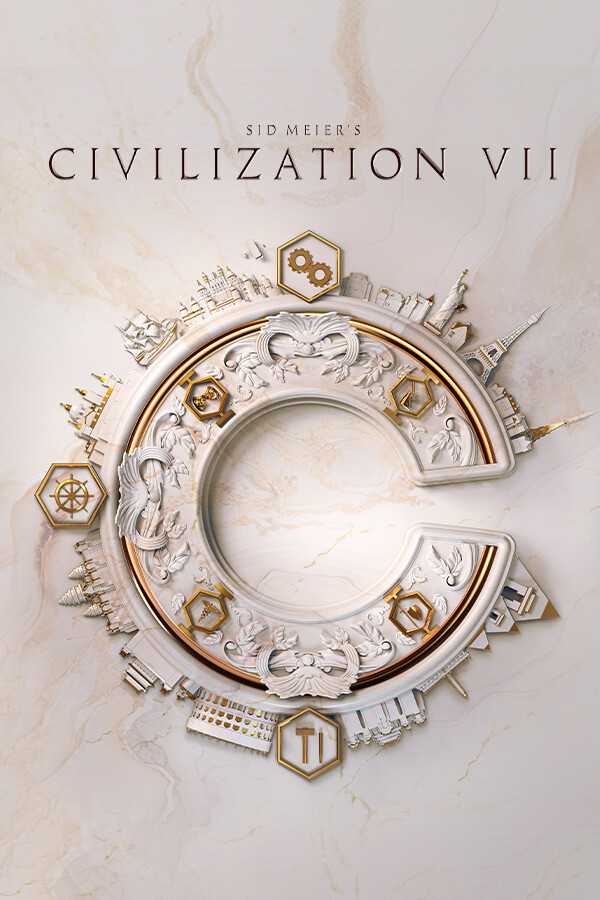
Just One More Turn, Reinvented
For thirty-four years, Sid Meier's Civilization has been the gold standard of 4X strategy, the series that coined the phrase "just one more turn" and has stolen more collective hours from humanity than any reasonable person should admit. Civilization VII arrives with the unenviable task of following up one of the most beloved entries in the franchise, Civ VI, while pushing the formula forward in ways that feel meaningful rather than iterative. The result is a game that makes some of the boldest structural changes the series has ever seen, changes that will thrill some longtime fans and frustrate others in roughly equal measure. After spending well over a hundred turns across multiple campaigns, we can say this: Civilization VII is an excellent strategy game that does not always feel like the Civilization we know, and that tension defines the entire experience.
Overview
Developed by Firaxis Games and published by 2K Games, Civilization VII represents the most significant mechanical departure the series has undertaken since the shift to hex tiles in Civ V. The headline feature is the Ages system, which divides each game into three distinct eras: Antiquity, Exploration, and Modern. At the transition between each Age, players make sweeping choices about their civilization's direction, selecting a new civilization identity that carries forward certain legacy bonuses while fundamentally altering your playstyle and available units. It is a dramatic reimagining of how a Civ game flows, and it is the feature that has generated the most discussion, both positive and negative, within the community. The game launched simultaneously on PS5, Xbox Series X, PC, and Nintendo Switch 2 with full cross-platform play, a first for the franchise and a welcome addition for a series that has increasingly found an audience on console.
Gameplay and Mechanics
Let us start with the Ages system, because everything else in Civilization VII orbits around it. In previous Civ games, you chose a civilization at the start and that was your identity for the entire playthrough. Cleopatra was Cleopatra from the Stone Age to the Information Age. In Civ VII, your civilization evolves. You might start as Egypt in Antiquity, transition to the Songhai Empire during Exploration, and emerge as Modern Brazil in the final age. Each transition is triggered by reaching certain milestones, and the civilization options available to you depend on your geography, achievements, and the legacy path you have built. In theory, this creates a more dynamic and historically resonant experience. In practice, it can feel jarring. We built an intricate web of Egyptian wonders and district synergies only to watch our civilization transform into something that did not leverage those investments in the same way. The transitions feel less like natural evolution and more like starting a new game with some bonuses carried over.
That said, the Ages system does solve a real problem that has plagued Civ games for decades: the late-game slog. By restructuring each game into three contained arcs, Firaxis has made the entire playthrough feel eventful. The Exploration Age introduces naval mechanics and colonization pressures that give the mid-game a sense of urgency it often lacked in Civ VI. The Modern Age collapses into a tense endgame sprint that feels genuinely climactic. Each Age has its own victory conditions that contribute to a final scoring system, which means you are always working toward something immediate rather than grinding toward a distant goal.
The commander system is another significant addition. Leaders are now separate from civilizations and act as customizable characters with skill trees, equipment, and unique abilities that evolve across Ages. You can have multiple commanders leading different armies or managing different aspects of your empire. It adds a layer of RPG-like progression that we found surprisingly engaging, though it can feel overwhelming when you are simultaneously managing city production, diplomatic relationships, military campaigns, and three commanders' skill trees. The interface does a reasonable job of keeping things navigable, but there is a learning curve even for Civ veterans.
Diplomacy has been overhauled with a relationship system that tracks not just your actions but your reputation across Ages. Break a promise in Antiquity and it will haunt your diplomatic standing in the Modern Age. The AI, unfortunately, remains the series' weakest link. While it is competent enough on higher difficulties to provide a challenge, it still makes baffling strategic decisions, particularly around warfare and trade. We witnessed multiple instances of AI civilizations declaring war with no military to speak of, or refusing trade deals that were overwhelmingly in their favor.
Presentation
Civilization VII is a beautiful game, trading the cartoonish charm of Civ VI for a more grounded, painterly aesthetic that splits the difference between realism and stylization. The map is gorgeous, with terrain that feels alive in a way previous entries never achieved. Forests sway, rivers glimmer, and cities grow organically from small settlements into sprawling metropolises with visible districts and landmarks. The transition between Ages is accompanied by a dramatic visual shift that transforms the entire map, and while this reinforces the jarring quality of those transitions, it is undeniably impressive to watch your world evolve.
The music, composed by Geoff Knorr and a team of collaborators, is outstanding. Each civilization has its own musical theme that evolves across Ages, growing from simple acoustic arrangements into full orchestral pieces. The UI has been streamlined significantly from Civ VI, with better information hierarchy and a cleaner layout that works well on both mouse-and-keyboard and controller. The Switch 2 version, while graphically pared back, runs surprisingly well and makes excellent use of the handheld form factor for a game that practically demands portable play.
Content and Value
At launch, Civilization VII includes a respectable but not overwhelming amount of content. There are over thirty civilizations spread across three Ages, dozens of leaders, and multiple victory paths. However, veterans will notice absences. Several fan-favorite civilizations are missing, and certain mechanics that were introduced in Civ VI's expansions, like climate change and dramatic ages, are nowhere to be found. This is a familiar pattern for the franchise, which has historically launched with a solid base game and expanded it significantly through DLC and expansions. It is worth acknowledging, though, that at sixty-nine ninety-nine, the base game feels like it is asking a premium price for what will eventually be a more complete experience.
That said, the replayability is strong. The Ages system, for all its divisiveness, does ensure that no two playthroughs feel the same. The combination of starting civilization, Age transitions, commander builds, and map generation creates enormous variety, and the cross-platform multiplayer opens up the player base significantly. We sank forty hours into the game before writing this review and barely scratched the surface of possible civilization combinations.
What Works and What Doesn't
What works is the ambition. Firaxis could have released Civ VI with better graphics and a few quality-of-life improvements and most fans would have been satisfied. Instead, they took genuine risks with the Ages system, the commander mechanic, and the restructured victory conditions. These risks pay off more often than they do not, creating a strategy game that feels fresh in ways the genre rarely achieves. The presentation is top-tier, the musical score is the best in the series' history, and the cross-platform play is a game-changer for multiplayer enthusiasts. What does not work is the rough edges that these ambitious changes expose. The AI needs significant improvement. The Ages transitions, while conceptually interesting, can feel like they are working against the player's carefully laid plans. Several features that Civ VI players take for granted are missing. And the leader progression system, while deep, adds complexity that not every player will welcome.
Pros
- Ages system adds genuine variety and solves the late-game slog
- Navigable commander system with satisfying RPG progression
- Beautiful art direction with a striking painterly aesthetic
- Cross-platform play is a welcome first for the series
Cons
- Ages transitions feel disruptive and can undermine long-term strategies
- AI remains inconsistent and makes baffling decisions
- Missing features and civilizations at launch compared to Civ VI with expansions
- Divisive leader progression adds complexity not everyone will enjoy
Final Verdict
Sid Meier's Civilization VII is an excellent strategy game and a bold, if imperfect, reinvention of one of gaming's most iconic franchises. The Ages system is the kind of structural risk that will define this entry for years to come, and while we think it ultimately works more often than it does not, we understand why it has divided the community. The commander system adds welcome depth, the presentation is stunning, and the cross-platform multiplayer removes a barrier that has long limited the series' social potential. Where it falters is in the AI, the missing content that will inevitably arrive as paid DLC, and the occasionally jarring transitions that can make the game feel like three smaller games stitched together rather than one cohesive epic. If you are a Civ fan, this is absolutely worth your time, but temper your expectations: this is a foundation being laid, not a finished cathedral. History suggests that Civilization VII's best days are still ahead of it, and we are genuinely excited to see what Firaxis builds on this ambitious base.