Opening Hook
The first thing Fable does right is make you laugh. Within five minutes of starting Playground Games' long-awaited reboot, a chicken has insulted your lineage, a merchant has tried to sell you a sword that is clearly just a stick with a ribbon tied to it, and the narrator has broken the fourth wall to question your life choices. It is charming in a way that few modern games dare to be, dripping with a peculiarly British wit that feels both nostalgic and fresh. But charm, as we discovered over the next 20 hours, can only carry a game so far. Fable is a beautiful, frequently hilarious, and deeply uneven experience that never quite decides whether it wants to be a grand RPG epic or a lighthearted fairy tale romp. It ends up being a pleasant, if somewhat forgettable, compromise between the two.
Overview
Fable is a full reboot of the beloved Xbox franchise, developed by Playground Games, the studio best known for the Forza Horizon series. Set in the mythical land of Albion, this new entry drops the numerical sequel convention and starts fresh with a new hero, a new threat, and a new interpretation of the world that series creator Peter Molyneux first envisioned over two decades ago. Published by Xbox Game Studios and available on Xbox Series X and PC, it represents one of Xbox's flagship first-party titles for 2025. The game casts you as a customizable hero who discovers they possess a connection to an ancient magical force, setting off a quest across Albion to prevent a cataclysm orchestrated by a theatrical villain named Aldric the Hollow. The setup is straightforward fantasy fare, but the execution leans heavily into comedy and character, making even the most tropey plot beats feel enjoyable thanks to sharp writing and stellar voice performances.
Gameplay and Mechanics
This is where Fable begins to show its cracks. The combat system is built around a three-pillar approach: melee, ranged, and magic. You can swap between swords, bows, and spell gauntlets on the fly, and there is a progression tree for each discipline that unlocks new abilities and combo finishers. On paper, it sounds robust. In practice, it feels like each pillar was designed to be serviceable rather than exceptional. Melee combat lacks the weight and responsiveness we expect in 2025. There is a noticeable delay between input and attack animation that makes parrying feel more like a guessing game than a skill check. Magic fares better, with some genuinely spectacular spell effects, but the cooldown timers discourage creative combo play and push you toward spamming your strongest ability whenever it becomes available.
The open world, while visually stunning, suffers from a similar lack of depth. Albion is divided into several large regions, each with its own biome, town, and set of side quests. The environments are gorgeous, from the rolling green hills of Brighthollow to the eerie, fog-drenched swamps of Murkmire. But the activities scattered across these landscapes feel disappointingly familiar. You will clear bandit camps, find collectibles, solve simple environmental puzzles, and escort NPCs through danger zones. We have done all of this before, in dozens of other games, and Fable does not add enough of its own flavor to make these activities compelling beyond the first few hours. The morality system, a hallmark of the original series, has been simplified to the point of irrelevance. Your choices affect NPC reactions and your hero's appearance, but the consequences rarely extend beyond cosmetic changes and minor dialogue variations.
Where the game shines mechanically is in its hero progression and customization. Leveling up grants you access to increasingly wild abilities, like summoning a spectral chicken army or turning enemies into sheep. These absurdist powers feel uniquely Fable and inject genuine fun into the otherwise routine combat. The housing and property system also returns, allowing you to buy, decorate, and rent out homes across Albion. It is a surprisingly addictive side loop that adds a layer of economic strategy to the experience.
Presentation
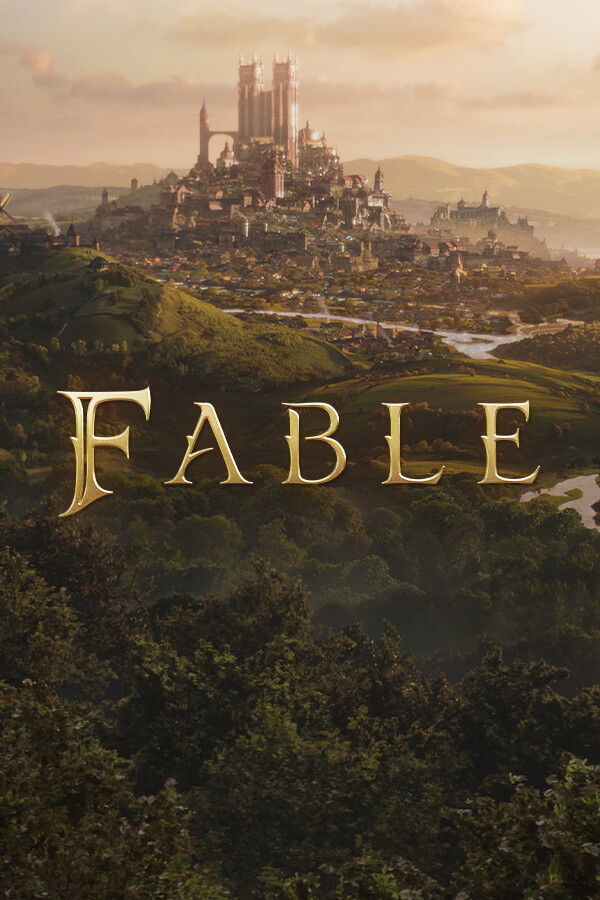
If nothing else, Fable is one of the most visually striking games of the year. Playground Games' expertise with the ForzaTech engine translates beautifully into a fantasy setting. The lighting is extraordinary, with golden hour sunsets casting long shadows through forest canopies and magical effects illuminating dark dungeons with vibrant color. Character models are expressive and detailed, with a slightly exaggerated art style that splits the difference between realism and Pixar-esque stylization. The world feels alive with ambient detail: butterflies flutter through meadows, tavern patrons argue and sing, and weather systems roll in with dramatic visual flair.
The voice acting deserves special mention. The cast delivers performances that elevate every interaction, from the sardonic narrator to the bumbling town guards to the genuinely menacing final boss. The soundtrack, composed by Russell Shaw, who scored the original Fable games, blends Celtic folk instrumentation with orchestral grandeur. It is nostalgic without being derivative, and several town themes are genuinely earworm material. The UI is clean and readable, though the inventory system becomes cluttered in the late game as you accumulate weapons, potions, and cosmetics without an efficient sorting mechanism.
Content and Value
The main story campaign clocks in at around 15 to 18 hours, which feels short for a full-priced $69.99 RPG. Side quests can push that to 25 to 30 hours, but many of them lack the narrative depth to feel worthwhile. The best side content involves multi-step questlines for specific NPCs that unfold over time, like helping a retired adventurer reclaim his glory or mediating a feud between two rival bakers. These missions showcase the writing team at their best and make us wish the rest of the side content matched their quality. There is no post-game content to speak of, no new game plus mode, and no multiplayer, which limits the game's longevity. For completionists, hunting down every collectible and buying every property might add another 10 hours, but the rewards for doing so are largely cosmetic.
What Works and What Does Not
Fable succeeds as a charming, lighthearted adventure through a beautifully realized world. The writing is consistently funny, the art direction is top-tier, and the sense of whimsy that defined the original series has been faithfully preserved. But beneath the polish, the game struggles with mechanical depth. Combat is adequate but never exciting. The open world is gorgeous but rarely surprising. And the story, while entertaining, lacks the emotional stakes needed to make the climax land with real impact. It is a game that is easy to enjoy in the moment but difficult to remember a week later. Playground Games has built a strong foundation for this rebooted franchise, but the next entry needs to dig deeper.
Pros
- Charming world and consistently sharp, funny writing
- Beautiful reimagining of Albion with stunning visuals
- Satisfying hero progression with creative abilities
- Great humor throughout that captures the series' spirit
Cons
- Combat feels simplistic and lacks responsiveness
- Story lacks emotional stakes despite strong setup
- Open world is pretty but filled with shallow activities
- Short main campaign for a full-priced RPG
Final Verdict
Fable is a game at war with itself. It wants to be a crowd-pleasing blockbuster and a quirky British comedy, a sweeping RPG epic and a breezy casual adventure. It never fully commits to any of these identities, and the result is a game that does many things well but nothing exceptionally. That said, there is a genuine warmth to this reboot that makes it hard to dislike. Albion is a wonderful place to spend 20 hours, the characters are memorable, and the humor lands more often than it misses. If you are a fan of the original trilogy or simply want a lighthearted RPG palate cleanser between heavier games, Fable delivers a perfectly enjoyable experience. Just do not expect it to redefine the genre the way Playground Games' racing work redefined theirs. It is a great start for a new era of Fable. We just hope the sequel has more to say.