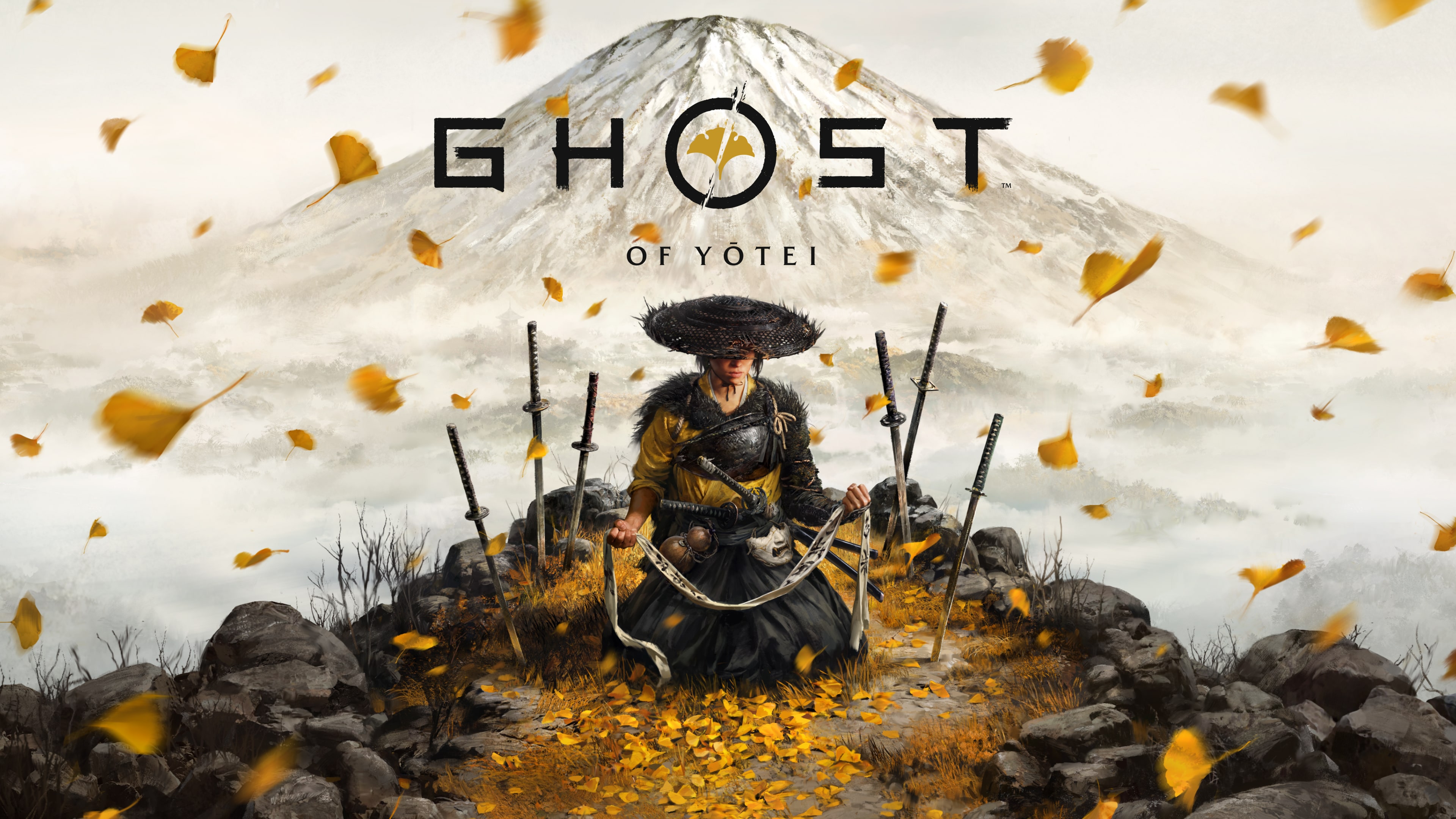
Shadows Over Mount Yotei
Ghost of Tsushima was one of the defining games of the PS4 generation, a love letter to samurai cinema wrapped in a lush open world that made every screenshot look like a Kurosawa frame. Ghost of Yotei takes that foundation and moves it three hundred years forward and several hundred miles north, transplanting the series to 1600s Hokkaido with a new protagonist, a new setting, and a refined set of mechanics that address many of the original's shortcomings. The result is a beautiful, absorbing open-world adventure that occasionally struggles to escape the shadow of its own formula but ultimately delivers an experience that justifies the journey. Sucker Punch Productions has not reinvented the wheel here, but they have polished it until it gleams.
Overview
Ghost of Yotei follows Atsu, a lone warrior living in the shadow of Mount Yotei in Hokkaido during the early Edo period. Unlike Jin Sakai's reluctant transformation from honorable samurai to pragmatic ghost, Atsu begins the game already operating outside the rigid structures of samurai code. She is a wanderer, a hunter, and a survivor whose connection to the Ainu people of Hokkaido and the encroaching forces of the Tokugawa shogunate forms the backbone of a story about cultural collision and personal identity. Developed exclusively for PS5 by Sucker Punch Productions and published by Sony Interactive Entertainment, Ghost of Yotei represents the studio's first sequel and their most technically ambitious project. The game launched in September 2025 to enormous commercial success and widespread critical attention.
Gameplay and Mechanics
The combat system in Ghost of Yotei builds intelligently on Tsushima's already excellent swordplay. Atsu's fighting style is distinct from Jin's, incorporating shorter blades, a hunting bow with expanded functionality, and a new grappling tool that adds verticality to both exploration and combat encounters. The stance system returns but has been streamlined, with Atsu's training reflected in a more intuitive switching mechanism that flows naturally with the rhythm of combat rather than requiring deliberate menu-like selection. Stealth has seen the most significant improvements. Enemy AI is noticeably smarter, with patrol routes that vary and guards who communicate with each other in ways that feel organic rather than scripted.
Atsu's toolkit for stealth is more diverse than Jin's ever was. Smoke bombs, distraction tools, and a new disguise system that lets her blend into civilian populations all contribute to a stealth experience that feels genuinely viable as a primary playstyle rather than a secondary option. The game rewards ghostly approaches with unique narrative outcomes and special abilities, creating meaningful incentive to avoid direct confrontation when possible. Boss encounters are a highlight, with each major antagonist requiring players to read attack patterns and exploit openings in encounters that feel closer to character-action games than the original's more grounded duels.
Exploration follows the familiar open-world template, with the guiding wind mechanic returning to lead players toward objectives without cluttering the screen with waypoints. Hokkaido is a stunning setting that offers more environmental variety than Tsushima, ranging from volcanic hot springs and dense boreal forests to snow-covered mountain passes and coastal fishing villages. The world is filled with activities, though this is where the familiar formula begins to show its age. Clearing enemy camps, finding collectibles, and liberating settlements will feel very recognizable to anyone who played the first game, and the lack of structural innovation in side content is Yotei's most notable weakness.
Presentation
Ghost of Yotei is one of the most visually stunning games on PS5. Sucker Punch's art team has outdone themselves with Hokkaido, creating a world that shifts between breathtaking natural beauty and haunting desolation with remarkable fluidity. The seasonal variation is a standout feature: the game's timeline spans several months, and the landscape transforms accordingly. Early chapters set in late summer are awash in golden light and wildflower meadows, while later acts plunge the world into deep winter, blanketing familiar locations in snow and ice and fundamentally changing how they look and play.
The photo mode, already excellent in Tsushima, has been expanded with new filters, poses, and lighting controls that make it the best implementation in any game to date. Character animations are fluid and expressive, with Atsu's performance capture conveying emotion through body language as effectively as through dialogue. The soundtrack blends traditional Japanese instrumentation with Ainu musical elements, creating an audio identity that distinguishes Yotei from its predecessor. Voice acting is strong throughout, with the Japanese language track being particularly recommended for immersion. Technical performance is rock-solid, with the quality mode delivering a stable thirty frames per second at native 4K resolution, and the performance mode maintaining sixty frames per second with minimal visual compromise.
Content and Value
The main story runs approximately thirty hours, with a completionist run pushing past fifty. Sucker Punch has added meaningful side content in the form of extended character questlines called Bonds, which flesh out supporting characters through multi-part missions that rival the main story in quality. These are a significant step up from the tales of Tsushima, offering genuine narrative depth and mechanical variety. The game also introduces a crafting and survival-lite system tied to Atsu's role as a hunter, with animal tracking, resource gathering, and gear modification providing a satisfying loop that complements the core combat and exploration.
At seventy dollars, Ghost of Yotei offers a substantial single-player experience. The absence of any multiplayer mode at launch (Legends mode is expected to follow later) means the value proposition rests entirely on the campaign, which delivers handsomely. The Legends co-op mode from Tsushima was a beloved addition, and its absence here at launch is a minor disappointment, but the single-player content is rich enough to stand on its own.
What Works and What Doesn't
Ghost of Yotei excels when it leans into its new identity. Atsu is a compelling protagonist whose outsider perspective gives the narrative a different emotional texture than Jin's story of duty and sacrifice. The Hokkaido setting is gorgeous and varied, the combat improvements are meaningful, and the enhanced stealth system finally makes the "Ghost" playstyle feel like the definitive way to experience the game. The Bond questlines are the best side content Sucker Punch has ever produced, and the photo mode will singlehandedly keep players engaged for hours beyond the story's conclusion.
Where Yotei stumbles is in its reluctance to evolve the open-world structure. The activities scattered across Hokkaido are well-crafted individually but collectively feel like variations on a template that was already showing wear in 2020. Act 2 in particular suffers from pacing issues, with a stretch of narrative downtime that coincides with the game's densest concentration of optional content, creating a middle section that can feel like it is treading water before the excellent final act. The open-world formula is comfortable and proven, but comfort and ambition do not always coexist.
Pros
- Gorgeous open world in Hokkaido
- Compelling new protagonist
- Improved stealth mechanics
- Stunning photo mode
Cons
- Familiar open-world formula
- Side content can feel repetitive
- Pacing issues in Act 2
Final Verdict
Ghost of Yotei is a worthy successor to one of PlayStation's finest exclusives. Sucker Punch has crafted a world of extraordinary beauty and populated it with a story and characters that earn emotional investment, while meaningfully improving the combat and stealth systems that form the game's mechanical backbone. It does not take the creative risks that might have elevated it from excellent to genre-defining, and the open-world structure occasionally feels like it is coasting on a proven template rather than pushing boundaries. But when the wind sweeps across a snow-covered valley and Atsu draws her blade against impossible odds, Yotei reminds us why this series captured our imaginations in the first place. It is a beautiful, confident, and thoroughly enjoyable adventure that any PS5 owner should experience.