Opening Hook
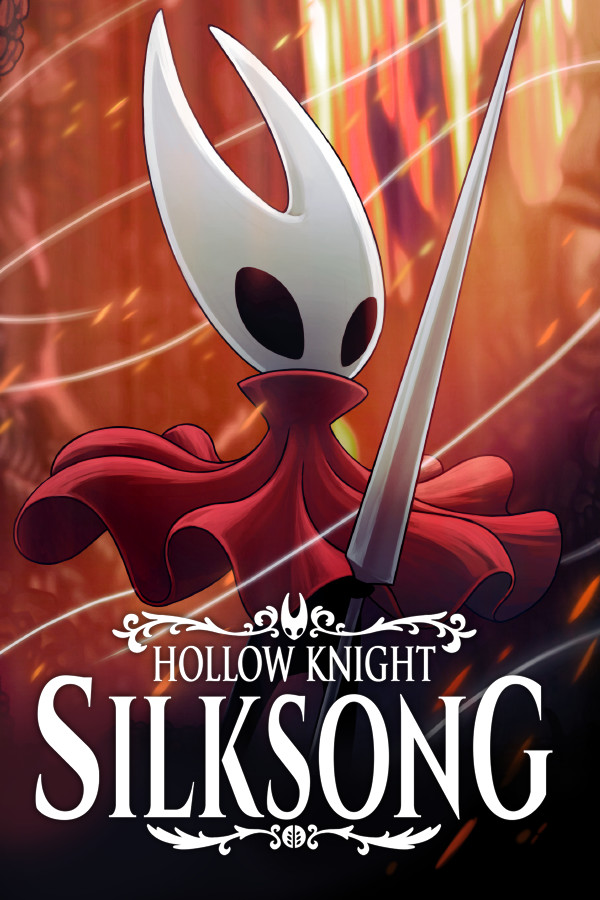
There is a moment, roughly four hours into Hollow Knight: Silksong, when everything clicks. You are leaping between crumbling silk platforms above a bottomless chasm, threading Hornet's needle through a gauntlet of thorned guardians, and the orchestral score swells into something so achingly beautiful that you forget you have been holding your breath. In that single sequence, Team Cherry proves that the years of waiting were not just justified but necessary. Silksong is not merely a sequel to one of the greatest indie games ever made. It is a statement of artistic intent so confident and so meticulously realized that it redefines what a two-person studio can achieve. We do not say this lightly: Hollow Knight: Silksong is a masterpiece.
Overview
Silksong places you in the role of Hornet, the princess-protector of Hallownest, who awakens in an entirely new kingdom called Pharloom. Unlike the Knight's somber, weighty journey through the original game, Hornet's adventure is faster, more vertical, and threaded with a narrative urgency that propels you forward even as the world begs you to explore every hidden corner. Team Cherry, the Melbourne-based duo of Ari Gibson and William Pellen, originally conceived Silksong as DLC for the first game before the scope ballooned into a full standalone title. That ambition is felt in every pixel. Pharloom is enormous, easily rivaling Hallownest in scale while surpassing it in environmental variety. From the luminous Moss Grotto to the industrialized Forge Lands to the haunting Deep Docks, each zone has its own ecosystem, enemy set, and musical identity. The game was released on August 12, 2025, across PC, Nintendo Switch 2, PS5, and Xbox Series X, and it runs beautifully on every platform we tested.
Gameplay and Mechanics
If Hollow Knight was a contemplative descent into darkness, Silksong is a kinetic ascent into light. Hornet's moveset is built around speed, silk, and verticality. Her needle serves as both melee weapon and grappling tool, allowing you to lunge across gaps, bind enemies in silk traps, and chain aerial combos that feel exhilarating once you internalize the rhythm. The Soul system from the original game has been replaced with Silk, a resource generated through combat that fuels both healing and special tools. This creates a constant push-pull tension: do you weave a healing cocoon and risk leaving yourself vulnerable, or spend that silk on a devastating needle storm to finish the fight? Every encounter is a micro-decision, and that decision-making elevates even routine enemies into meaningful obstacles.
The tool system is Silksong's most significant mechanical addition. Rather than collecting charms that modify passive abilities, Hornet crafts tools at workbenches scattered throughout Pharloom. These range from spike traps and pheromone lures to a silk catapult that launches you across vast distances. You can equip a limited number at any time, encouraging experimentation. We found ourselves swapping loadouts constantly depending on the zone, the boss, or even our mood. Some combinations feel genuinely broken in the best way, like pairing the Thread Hook with the Gossamer Storm to turn Hornet into a whirlwind of aerial destruction. The sense of player expression here is remarkable.
Boss encounters deserve their own paragraph because they are, without exaggeration, some of the finest in the action genre. Silksong features over forty boss and mini-boss fights, and the variety is staggering. Early bosses teach you the fundamentals: read patterns, punish openings, respect spacing. But the later encounters evolve into multi-phase spectacles that demand mastery of every tool in your arsenal. The Lace fights in particular stand out as a recurring rival encounter that grows more complex each time, culminating in a final duel that had us white-knuckling our controllers. The difficulty curve is steep but fair. Every death teaches you something, and every victory feels earned.
Presentation
Silksong's hand-drawn art is simply breathtaking. Team Cherry has refined their already gorgeous aesthetic into something richer, more detailed, and more alive. Pharloom's environments are layered with parallax backgrounds that create a stunning sense of depth. Light filters through silk canopies in the Grotto, embers drift lazily through the Forge Lands, and bioluminescent creatures pulse in the Deep Docks. The character animation is equally impressive, with Hornet's movements conveying weight and grace simultaneously. Her idle animations alone tell a story of a warrior constantly alert, needle at the ready.
Christopher Larkin's soundtrack is, once again, transcendent. The score weaves between haunting choral arrangements, propulsive string crescendos, and delicate piano passages that match every emotional beat of the journey. Several tracks had us pausing just to listen. The sound design is equally meticulous, from the satisfying thwack of Hornet's needle connecting with an enemy to the eerie ambient hums of Pharloom's deeper caverns. On a technical level, the game maintains a locked 60 frames per second on all platforms, with the Switch 2 version being a particular triumph of optimization. Load times are virtually nonexistent.
Content and Value
At $29.99, Silksong is an almost absurd value proposition. Our first playthrough took approximately 35 hours, and we estimate we found perhaps 70% of the game's secrets. There are hidden boss encounters, optional challenge areas, secret NPCs with their own questlines, and an entire post-game gauntlet that we are still working through. The Silk Soul mode, a harder difficulty unlocked after completion, remixes enemy placements and boss patterns in ways that make repeat playthroughs feel genuinely fresh rather than simply punishing. Team Cherry has also hinted at free content updates in the future, though even without them, the base package is overwhelmingly generous. In an era where $70 games regularly clock in at 10 to 15 hours, Silksong's depth and density are a powerful reminder of what passion-driven development can deliver.
What Works and What Does Not
Almost everything in Silksong works at an exceptional level. The movement is sublime, the world design is masterful, the boss fights are unforgettable, and the art direction is among the best we have seen in any game, indie or otherwise. But it is not without flaws. The difficulty, while fair, will undeniably alienate some players. There is no accessibility-focused easy mode, and certain late-game platforming gauntlets require a level of precision that borders on masochistic. We also found that the map system, while improved over the original, can still lead to confusion in the game's largest zones. Pharloom is so densely packed with interconnected paths that we occasionally lost our bearings, spending 20 minutes searching for a passage we had missed. These are minor complaints in the grand scheme, but they prevent the game from being universally accessible.
Pros
- Masterful level design that rewards exploration at every turn
- Hornet is a joy to control with fluid, responsive movement
- Incredible hand-drawn art that surpasses the original
- Massive world with dozens of hours of content to discover
- Outstanding soundtrack by Christopher Larkin
Cons
- Punishing difficulty may deter casual players
- Some late-game navigation confusion in dense zones
Final Verdict
Hollow Knight: Silksong is that rarest of things: a sequel that surpasses its predecessor in virtually every dimension while carving out its own distinct identity. Team Cherry has delivered a game of staggering ambition and meticulous craftsmanship. Hornet's journey through Pharloom is one of the most rewarding, challenging, and emotionally resonant experiences we have had in years. It is a game that respects your time, your intelligence, and your desire for genuine discovery. If you have even a passing interest in action games, platformers, or Metroidvanias, Silksong is essential. If you loved the original Hollow Knight, it is transcendent. This is not just one of the best games of 2025. It is one of the best games ever made.