The Bounty Hunter Returns
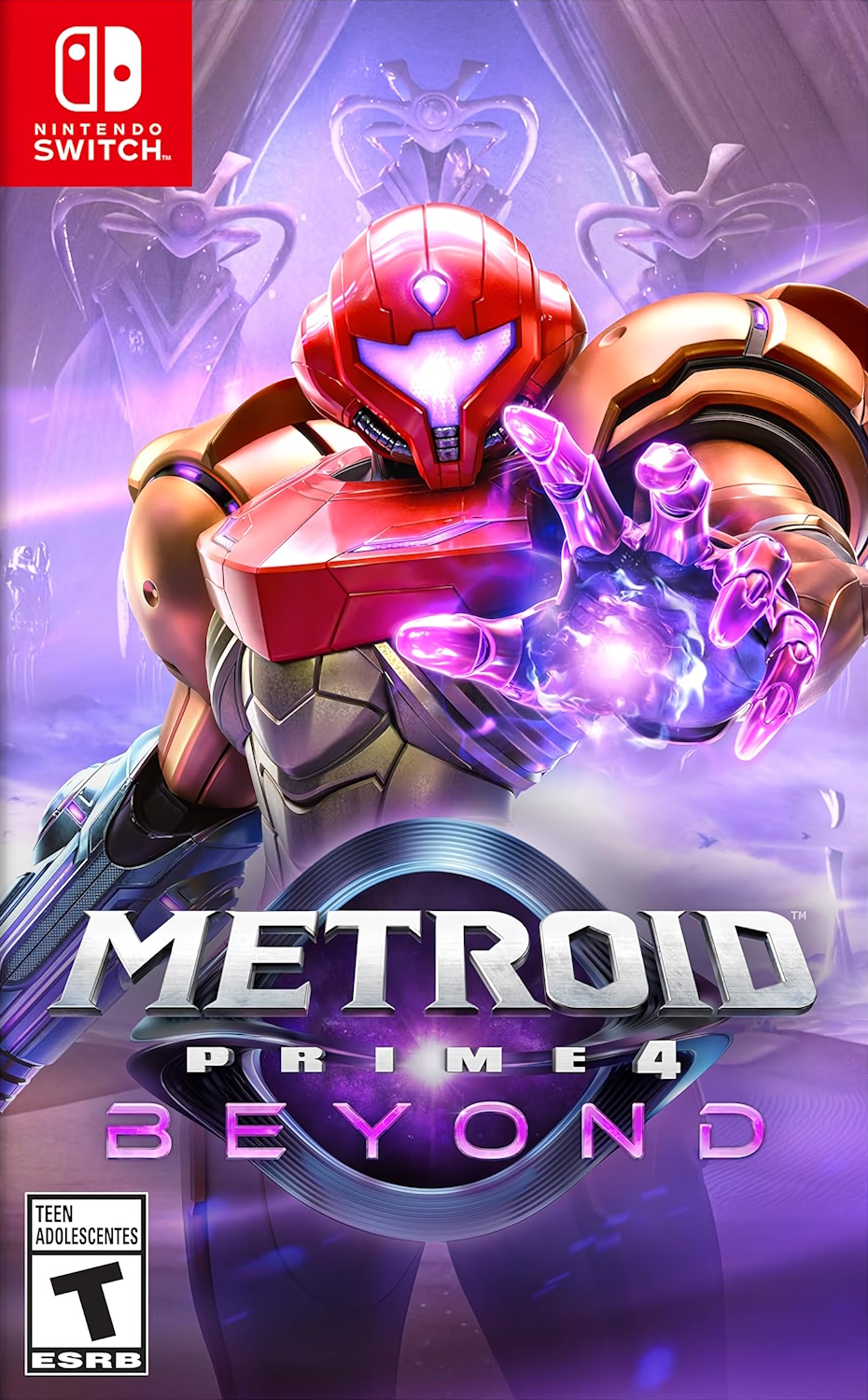
Seven years. That is how long Metroid Prime 4 has existed in the public consciousness as a title card, a promise, and eventually a source of anxiety after Nintendo famously scrapped the original development and handed the project to Retro Studios in 2019. Seven years of wondering whether the game could possibly live up to the weight of expectation, whether Retro could recapture the magic that made the original Metroid Prime trilogy one of gaming's greatest achievements. We are not going to bury the lede: Metroid Prime 4: Beyond was worth the wait. This is not just a great Metroid game. It is a landmark achievement in level design, atmospheric storytelling, and the kind of meticulous craftsmanship that has become Nintendo's signature. It is also the game that justifies the Switch 2's existence, a technical showcase that demonstrates what the new hardware can do when a world-class studio pushes it to its limits.
Overview
Metroid Prime 4: Beyond finds Samus Aran pursuing the rogue Sylux, a bounty hunter whose machinations threaten to unleash a Metroid-based bioweapon across the galaxy. The narrative, told primarily through environmental storytelling, scan logs, and sparse but impactful cutscenes, takes Samus to a new star system comprising multiple interconnected planets. This is the largest Metroid Prime game by a significant margin, with each planet functioning as a distinct biome with its own ecosystem, architectural history, and secrets. Retro Studios has maintained the series' tradition of minimal dialogue and maximum atmosphere, trusting players to piece together the story through observation and exploration rather than exposition. It is a storytelling approach that feels increasingly rare and precious in an era of cinematic games, and it works beautifully here.
Gameplay and Mechanics
At its core, Metroid Prime 4 is still a first-person adventure game built on the loop of exploration, ability acquisition, and backtracking. You explore labyrinthine environments, encounter barriers you cannot yet overcome, acquire new abilities that open previously inaccessible paths, and gradually expand your understanding of an interconnected world. This formula was established two decades ago with the original Metroid Prime, and it remains one of the most satisfying gameplay loops in the medium. What Beyond adds is scale and fluidity. The movement system has been significantly modernized. Samus can now slide, mantle ledges, and dash in any direction while maintaining the weighty, grounded feel that distinguishes Metroid Prime's movement from typical first-person shooters. The new Gravity Shift ability, acquired in the game's second act, allows Samus to briefly alter local gravity, creating platforming sequences that play with spatial orientation in ways that are initially disorienting and eventually exhilarating.
The level design is where Beyond truly earns its place alongside the best in the series. Each planet is a masterwork of interconnected spaces, filled with shortcuts that loop back to earlier areas, hidden passages that reward careful observation, and environmental puzzles that integrate seamlessly with the world's lore. There is a moment on the ice planet Kryon where we discovered that a waterfall we had walked past a dozen times was actually concealing a tunnel that led to an entirely new sector of the map, and the rush of discovery felt identical to the best moments of the original Metroid Prime. Retro Studios understands that the joy of Metroid is not just acquiring new abilities but realizing how those abilities recontextualize spaces you thought you already understood.
Combat has been refined without losing its identity. The lock-on system returns, maintaining the series' focus on positioning and timing over twitch accuracy. New beam types and visor modes add tactical variety, and the boss encounters are spectacularly designed, each one functioning as both a combat challenge and a puzzle that requires creative use of your current ability set. One boss fight on the volcanic planet Pyronis had us switching between three different beam types and two visor modes in a sequence that felt like solving a Rubik's Cube under fire. It was intense, demanding, and deeply satisfying to overcome.
The scan visor, a defining feature of the Prime series, returns with expanded functionality. Scanning now reveals layered information that updates as you progress, and certain scan entries connect to form a broader narrative mosaic. We spent an embarrassing amount of time scanning every creature, every piece of ancient text, and every environmental detail, and the game rewarded that thoroughness with a richly detailed universe that extends far beyond what the main path reveals.
Presentation
Metroid Prime 4: Beyond is the best-looking game on the Nintendo Switch 2, and it is not particularly close. Retro Studios has achieved something remarkable with the hardware, producing environments that rival current-gen consoles in art direction if not raw polygon count. The lighting is extraordinary, with each planet possessing a distinct visual identity defined by its color palette and atmospheric effects. The bioluminescent caverns of Lumara glow with an otherworldly beauty, while the windswept ruins of Tallon V's moon feel desolate and ancient. Particle effects, water simulation, and volumetric fog are all handled with a fidelity that consistently surprised us. The game runs at a locked sixty frames per second in docked mode and maintains a remarkably stable performance in handheld, with only minor dips during the most visually intensive boss encounters.
The audio design is, predictably for a Metroid Prime game, outstanding. Kenji Yamamoto's score blends ambient electronic textures with orchestral motifs that evoke the loneliness and wonder of deep space exploration. Each planet has its own soundscape, from the howling winds and cracking ice of Kryon to the industrial hum and dripping condensation of the space pirate installations. The sound of Samus's arm cannon charging, the chirp of the scan visor activating, the satisfying thud of a morph ball bomb detonation — every audio element has been crafted with obsessive attention to detail. Playing with headphones is strongly recommended, as the spatial audio transforms the experience from impressive to immersive.
Content and Value
Our initial playthrough of Metroid Prime 4 took approximately twenty-five hours, which places it firmly as the longest game in the Prime series. However, we finished with only sixty-eight percent of items collected, and the game's interconnected design means that returning to earlier planets with new abilities reveals entire wings of content we missed on our first pass. A thorough completionist run is likely in the forty-hour range, and the game includes a hard mode and a randomizer option that remixes item locations for subsequent playthroughs, adding significant replay value for the dedicated.
At fifty-nine ninety-nine, the price is standard for a first-party Nintendo title, and we consider it excellent value. This is a dense, meticulously crafted experience where every room feels designed with intention. There is no padding, no filler, no open-world busywork. Every corridor, every chamber, every hidden tunnel exists because it serves the game's exploration loop or its environmental narrative. In an industry increasingly obsessed with hundred-hour runtimes, Metroid Prime 4's focused, curated design feels like a statement about the value of quality over quantity.
The multiplayer mode, however, is a different story. Beyond includes a competitive multiplayer component that supports up to four players in arena-style combat. While technically competent, it feels disconnected from the core experience, a checkbox feature that lacks the depth to sustain long-term engagement. We suspect most players will try it once and return to the single-player campaign, which is where the game's heart truly lives.
What Works and What Doesn't
What works is almost everything that defines the Metroid Prime experience, executed at the highest level Retro Studios has ever achieved. The level design is the best in the series, the atmosphere is thick and immersive, the exploration loop is endlessly satisfying, and the Switch 2 performance is a technical triumph. The scan lore is deep and rewarding, the boss encounters are creative and challenging, and the moment-to-moment gameplay maintains a flow state that made us lose track of time repeatedly. What does not work is less a matter of poor design and more a consequence of the genre's inherent characteristics. Backtracking, even in a world this well-designed, can feel tedious during the late-game item cleanup. The multiplayer mode adds little of value and feels like development resources that could have been better spent elsewhere. And the difficulty curve, which is beautifully paced through the first two-thirds of the game, spikes sharply in the final stretch, with a penultimate boss that took us nearly twenty attempts and tested our patience as much as our skill.
Pros
- Incredible level design that ranks among the best in the genre
- Atmospheric world-building told through environment and scan logs
- Satisfying exploration loop that rewards curiosity at every turn
- Excellent Switch 2 showcase with stunning visuals and stable performance
Cons
- Some backtracking tedium during late-game item collection
- Multiplayer mode feels tacked on and lacks depth
- Late-game difficulty spike may frustrate some players
Final Verdict
Metroid Prime 4: Beyond is a masterpiece of game design. It is the rarest kind of sequel, one that honors everything that made its predecessors great while finding new dimensions to explore within the same fundamental framework. Retro Studios has proven that the seven-year wait, the development restart, and the generational hardware leap were not just justified but necessary to produce something this refined. The level design is peerless, the atmosphere is intoxicating, and the exploration loop achieves a flow state that few games in any genre can match. The multiplayer is forgettable and the late-game difficulty can be punishing, but these are minor flaws in an otherwise outstanding package. For Nintendo Switch 2 owners, this is the system's must-have title. For Metroid fans, it is the game we have been dreaming about since 2017. And for anyone who appreciates meticulous, purposeful game design, Metroid Prime 4: Beyond is essential. Samus Aran is back, and she has never been better.