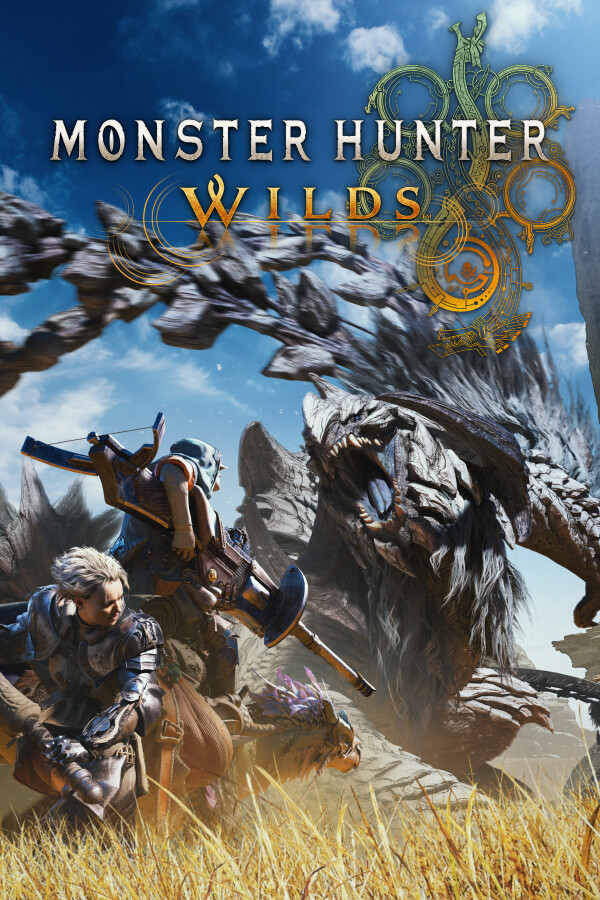
The Hunt Evolves
Monster Hunter World was a revelation when it launched in 2018, transforming a beloved but niche franchise into a global phenomenon by making its intricate hunting systems accessible without sacrificing depth. Seven years later, Monster Hunter Wilds takes the next evolutionary leap, and it is a big one. Capcom has built a game that feels like the full realization of what Monster Hunter has always aspired to be: a living, breathing ecosystem of colossal creatures and interconnected systems, where every hunt is a story and every piece of gear is a trophy. We have spent over a hundred hours tracking, fighting, carving, and crafting our way through Wilds, and we are still discovering new things. This is the new gold standard for the franchise, and one of the finest action RPGs ever made.
Overview
Monster Hunter Wilds is the sixth mainline entry in Capcom's long-running action RPG series, following the massive success of Monster Hunter World and its Iceborne expansion. Set in the Forbidden Lands, a vast and largely unexplored frontier beyond the familiar territories of previous games, Wilds tasks players with investigating a mysterious environmental phenomenon called the Tempest that is disrupting monster ecosystems and threatening human settlements. The game launched in February 2025 on PS5, Xbox Series X, and PC, and quickly became the fastest-selling entry in franchise history, surpassing twenty million units in its first month. Developed on Capcom's RE Engine, Wilds represents a generational leap in scope, visual fidelity, and systemic depth over its predecessors.
Gameplay and Mechanics
The most immediately striking change in Wilds is the seamless open-zone design. Previous Monster Hunter games, including World, divided their maps into discrete areas connected by loading corridors or hidden transitions. Wilds eliminates these barriers entirely, presenting each of its five major regions as a single continuous landscape that you can traverse without interruption. The Windward Plains, the first area most players will explore, is a vast expanse of rolling grasslands, rocky canyons, and ancient ruins that stretches to the horizon. The sense of scale is remarkable, and it serves a mechanical purpose beyond mere spectacle. Monsters migrate across these zones in real time, following behavioral patterns influenced by time of day, weather conditions, and the presence of other creatures.
This ecological simulation is Wilds' most impressive achievement. Monsters are not just targets to hunt; they are animals with routines, territories, and relationships. A Rathalos will hunt smaller herbivores at dawn, return to its nest at midday, and become aggressive toward anything that enters its territory at night. A Tempest storm rolling through an area can scatter entire herds, drive predators into unusual locations, and trigger turf wars between species that would never normally interact. The dynamic weather system is not just cosmetic; it fundamentally changes how hunts play out, creating emergent scenarios that keep the experience fresh even after dozens of hours.
All fourteen weapon types return, each rebalanced and expanded with new movesets and mechanics. The new Focus Strike system allows any weapon to execute a powerful precision attack by entering a brief aiming state, adding a layer of targeted damage that complements the existing combo systems. Dual weapon loadouts let hunters switch between two weapon types mid-hunt, opening up strategic possibilities that veteran players will spend months optimizing. The Seikret, a rideable companion creature, enables mounted combat and rapid traversal across the open zones, and riding into a hunt at full gallop before leaping off to deliver an aerial greatsword slam never gets old.
Crucially, Wilds also features the best onboarding in series history. The opening hours do an excellent job of teaching new players the fundamentals of hunting, crafting, and gear progression through a well-paced story that introduces mechanics gradually without feeling condescending. Veteran players can blitz through the early content quickly, but newcomers will appreciate the thoughtful tutorialization that World began and Wilds perfects.
Presentation
Monster Hunter Wilds is a gorgeous game that pushes the RE Engine to its limits. The five major regions each have a distinct visual identity, from the sun-baked Scarlet Forest with its massive crimson canopy to the Iceshard Reach, a frozen volcanic zone where geothermal vents create pockets of tropical warmth amid glacial fields. Monster designs continue to be the series' crown jewel, with new creatures like the sandstorm-generating Arkveld and the bioluminescent deep-sea elder dragon Xeno'naga ranking among the franchise's best. Returning monsters have been given visual overhauls that make them feel like natural inhabitants of the new ecosystems rather than transplants from older games.
The soundtrack is sweeping and dynamic, with battle themes that evolve based on the phase of the hunt and ambient tracks that shift with the time of day and weather conditions. The Palico and Seikret companion voice work is charming without being grating, and the environmental sound design is exceptional. You can hear a Diablos burrowing underground from hundreds of meters away, and the distant roar of a monster in distress will naturally draw you toward emergent encounters. Performance is generally strong on consoles, with the quality mode delivering stable thirty frames per second at high resolution and the performance mode targeting sixty, though busy multi-monster encounters in the open zones can cause noticeable frame drops on all platforms.
Content and Value
The sheer volume of content in Monster Hunter Wilds is staggering. The main story campaign runs approximately forty hours, but this is merely the appetizer. The endgame progression system, which unlocks after the credits roll, introduces master-rank versions of all monsters with new attack patterns, expanded material pools, and exclusive gear sets. The crafting system is as deep as it has ever been, with hundreds of weapons and armor sets to forge, each with unique skills and upgrade paths that incentivize hunting specific monsters repeatedly. The decoration and talisman systems add further build customization, and the community has already produced theorycrafting content that rivals the depth of a hardcore MMO.
At seventy dollars, Monster Hunter Wilds offers extraordinary value. This is a game designed to be played for hundreds of hours, and Capcom's track record of substantial free post-launch updates, culminating in a major paid expansion, means the content pipeline will continue for years. The cooperative multiplayer, which supports up to four players seamlessly in any quest, is the ideal way to experience the endgame. Hunting with friends, coordinating builds, and sharing the triumphant rush of felling a monster that has been carting you for hours is gaming at its social best.
What Works and What Doesn't
Monster Hunter Wilds succeeds most spectacularly in its world design and ecological systems. The seamless open zones and dynamic monster behaviors create a hunting experience that feels genuinely alive, where no two expeditions play out the same way. The weapon variety and build depth are unmatched in the action RPG genre, and the quality-of-life improvements to crafting, matchmaking, and inventory management demonstrate that Capcom has listened carefully to community feedback over the years. The onboarding is a triumph that should finally break down the series' reputation as impenetrable for newcomers.
Performance is the game's most notable weakness. The ambitious open-zone design and dynamic weather systems push current-gen hardware hard, and the resulting frame drops during intense encounters can disrupt the precise timing that Monster Hunter combat demands. Some quality-of-life features that fans have been requesting for years, such as a proper in-game damage log and more granular armor loadout management, are still absent. The story, while serviceable as a vehicle for progression, is forgettable and populated by characters who are charming in the way of anime archetypes without ever developing into anything more substantial.
Pros
- Seamless open world zones
- Dynamic weather and ecosystem
- Best onboarding in series history
- Incredibly deep weapon crafting
Cons
- Performance dips in busy areas
- Some quality-of-life features still missing
- Story is forgettable
Final Verdict
Monster Hunter Wilds is a monumental achievement that cements the franchise's place among gaming's elite action RPG series. Capcom has taken the accessible foundation of Monster Hunter World and expanded it in every direction, delivering seamless open zones teeming with dynamic wildlife, a combat system that is deeper and more varied than ever, and an onboarding experience that welcomes newcomers without talking down to veterans. Performance issues and a forgettable story are real but ultimately minor complaints against the sheer quality and quantity of what is on offer here. Whether you are a series veteran or a curious first-timer, Monster Hunter Wilds is an essential experience that will consume your time in the most satisfying way imaginable. Grab your weapon, saddle your Seikret, and join the hunt. You will not regret it.