Opening Hook
There is a moment in every NBA 2K game where the on-court action transcends the screen. A pick-and-roll unfolds with balletic precision. Your point guard threads a bounce pass through three defenders. The center catches it mid-stride, elevates, and throws down a posterizing dunk that sends the virtual crowd into hysteria. In that moment, NBA 2K26 is the greatest sports game ever made. Then you back out to the menu and the game asks if you would like to spend $4.99 on a new pair of virtual sneakers, and the spell shatters. This is the fundamental paradox of the NBA 2K franchise in 2025: the gameplay has never been better, and everything surrounding it has never been more hostile to the player. NBA 2K26 is a masterclass in basketball simulation wrapped in one of the most aggressively monetized packages in gaming.
Overview
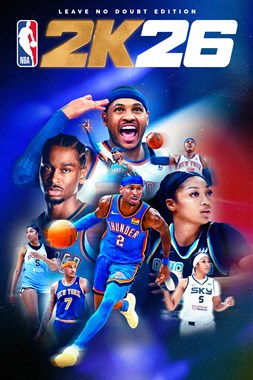
NBA 2K26 is the latest annual installment in Visual Concepts' long-running basketball simulation series, published by 2K Games. Released on September 5, 2025, for PS5, Xbox Series X, PC, and Nintendo Switch 2, it arrives with a new cover athlete, updated rosters reflecting the 2025-2026 NBA season, and a suite of incremental improvements across its various modes. The headline feature this year is the expanded ProPlay animation system, which uses motion-captured data from actual NBA footage to create player-specific movement signatures. The result is a game where Victor Wembanyama moves fundamentally differently from Shai Gilgeous-Alexander, not just in ratings but in the actual animation of their bodies on the court. It is a technical achievement that cements 2K's position as the undisputed king of basketball games. The question, as always, is whether technical excellence can overcome the problems that have plagued this franchise for years.
Gameplay and Mechanics
On the court, NBA 2K26 is phenomenal. The ProPlay system is not merely a marketing gimmick; it fundamentally changes how the game feels to play. Defenders plant their feet with realistic momentum. Big men lumber through the paint with genuine weight. Guards explode into crossovers with authentic quickness. The defensive AI has been significantly improved this year, making off-ball movement more intelligent and reducing the frequency of bizarre defensive breakdowns that plagued previous entries. Shot timing feels tighter and more rewarding, with a new shot meter that provides clearer visual feedback on release timing. The post game has been rebuilt from the ground up, adding a new series of contextual moves that trigger based on your position relative to the defender. Backing someone down now feels like a genuine chess match rather than an animation lottery.
MyNBA mode, the franchise simulation experience, remains the crown jewel for basketball purists. This year's additions include a new coaching AI that more accurately reflects real-world tactical tendencies, an expanded draft scouting system with more detailed prospect profiles, and a league-wide financial model that simulates salary cap dynamics with impressive granularity. We spent an embarrassing number of hours rebuilding the Charlotte Hornets into a dynasty over fifteen simulated seasons, and the mode's depth kept surprising us. Trade logic is smarter, free agency negotiations feel more realistic, and the new rivalry system creates emergent storylines between teams that add genuine narrative texture to the experience. If you only play NBA 2K for MyNBA, this is the best version of that mode ever created.
The problems begin the moment you venture into MyCareer or MyTeam. MyCareer's story mode this year follows your created player through a narrative involving a rivalry with a generational talent, a mentor relationship with a retired legend, and a subplot about brand building that feels suspiciously like a tutorial for the game's real-money economy. The voice acting is wooden, the dialogue is cringeworthy, and the story beats are predictable to the point of self-parody. Worse, progression in MyCareer is deliberately throttled to incentivize microtransaction spending. Raising your player's attributes from their starting values to anything competitive takes dozens of hours of grinding, or you can spend Virtual Currency purchased with real money to skip the tedium. The game does not just nudge you toward spending; it builds its entire progression economy around the assumption that you will.
Presentation
Visually, NBA 2K26 is stunning. Player models are among the most photorealistic in gaming, with skin shading, muscle definition, and facial expressions that occasionally veer into uncanny valley territory simply because they look too real. Arena atmospheres are impeccable, from the jumbotron animations to the crowd reactions to the dynamic lighting that shifts with the energy of the game. The broadcast presentation continues to be best-in-class, with commentary from Kevin Harlan, Clark Kellogg, and a rotating cast of analysts that provides relevant, context-sensitive analysis. The commentary does repeat more than we would like after extended sessions, but it remains the gold standard for sports game broadcasting.
The soundtrack features a curated playlist of hip-hop, R&B, and electronic tracks that sets an appropriate tone, though it skews heavily toward mainstream chart-toppers at the expense of variety. The Nintendo Switch 2 version deserves mention as a genuine surprise, running at a stable 60 frames per second with visual fidelity that, while obviously below the PS5 and Series X versions, is remarkably close. It is the first handheld NBA 2K experience that does not feel like a compromise. On the technical front, however, the game launched with significant server instability that made online modes unreliable for the first two weeks. Matchmaking dropped connections, MyTeam cards disappeared and reappeared seemingly at random, and the City hub world stuttered with persistent frame drops during peak hours.
Content and Value
Here is where things get uncomfortable. NBA 2K26 is a $69.99 game that is designed, at every level, to extract additional money from its players. MyTeam is a full-blown card game economy where building a competitive roster without spending money requires either superhuman luck or hundreds of hours of grinding. The City, MyCareer's open-world social hub, is a gauntlet of branded storefronts selling cosmetic items and boosts for Virtual Currency. Even the game's menus are cluttered with advertisements for VC bundles and limited-time offers. It is impossible to engage with NBA 2K26 for more than ten minutes without being reminded that your wallet is the game's primary target. For context, it is entirely possible to spend over $150 on VC in a single session and still not have enough to max out a MyCareer player. This is predatory design, plain and simple, and it is unconscionable in a full-priced retail product.
The modes themselves offer substantial content if you can stomach the monetization. MyNBA alone can provide hundreds of hours of engagement. Play Now Online, the straightforward ranked mode, is excellent for competitive players who want to skip the economy entirely. And the new Eras mode, which lets you replay pivotal NBA seasons with era-appropriate rules and rosters, is a fun nostalgia trip that adds genuine variety. But the shadow of monetization hangs over everything, making it difficult to recommend the game wholeheartedly even when the basketball itself is outstanding.
What Works and What Does Not
NBA 2K26 is a game of extremes. The on-court gameplay is the finest basketball simulation ever created, with the ProPlay system delivering a level of authenticity that is genuinely breathtaking. MyNBA mode is deep, engaging, and respectful of the player's time. But MyCareer is a grind designed to funnel you toward microtransactions, MyTeam is a pay-to-win card game disguised as a basketball mode, and the overall monetization strategy is more aggressive than ever. The server issues at launch were unacceptable for an always-online game, and while they have improved, the experience left a sour taste. NBA 2K26 contains a 9 out of 10 basketball game buried inside a 5 out of 10 monetization scheme, and your enjoyment will depend entirely on which parts you engage with.
Pros
- Best basketball gameplay ever made with ProPlay system
- ProPlay animation system delivers incredible authenticity
- MyNBA mode is the deepest franchise simulation available
Cons
- Aggressive monetization permeates nearly every mode
- MyCareer story is cringe-worthy with wooden voice acting
- Feels like an annual roster update in many areas
- Server issues plagued the launch window
Final Verdict
Reviewing NBA 2K26 feels like reviewing two completely different products. There is the basketball game, which is a genuine masterpiece of sports simulation, a technical marvel that captures the beauty, athleticism, and strategic depth of professional basketball better than any game before it. And then there is the business model, which treats its players as revenue streams to be optimized rather than fans to be delighted. If you plan to stick to Play Now and MyNBA, avoiding the microtransaction-laden modes entirely, NBA 2K26 is an easy recommendation. The on-court experience alone justifies the price of admission. But if you want the full package, if you want MyCareer to respect your time and MyTeam to reward skill over spending, you will be disappointed. Visual Concepts knows how to make the best basketball game in the world. We just wish they would stop making it so expensive to enjoy.