Opening Hook
There is a particular kind of excitement that only Pokemon can generate. When Game Freak announced that Legends: Z-A would be set entirely within the urban sprawl of Lumiose City, reimagined as a massive open-zone metropolis, the promise was tantalizing -- a Pokemon game that finally explored what it would mean for humans and Pokemon to share a living, breathing city. And when they revealed that Mega Evolution was returning as the game's central mechanic, longtime fans collectively lost their minds. Having now spent fifty hours with the finished product, we can say that Pokemon Legends: Z-A delivers on much of that promise while stumbling over some painfully familiar technical shortcomings. It is the best Pokemon game since Legends: Arceus, but it is also a reminder that Game Freak's ambition still outpaces their technical execution.
Overview
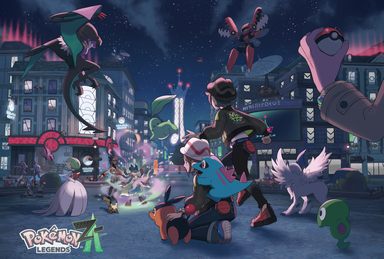
Pokemon Legends: Z-A is developed by Game Freak and published by Nintendo, releasing on November 14, 2025, as a flagship title for the Nintendo Switch 2. Set in a future version of Lumiose City from Pokemon X and Y, the game takes place during an ambitious urban redevelopment project that aims to create a utopia where humans and Pokemon coexist seamlessly within the city. You play as a new resident who arrives during this transitional period and becomes embroiled in the political tensions, ecological challenges, and mysterious incidents surrounding the project. The game builds on the real-time action-oriented gameplay of Legends: Arceus while introducing Mega Evolution as both a combat mechanic and a narrative focal point, weaving it into the story in ways that make it feel essential rather than tacked on.
Gameplay & Mechanics
The core gameplay loop of Legends: Z-A refines the formula established by Legends: Arceus. You explore Lumiose City and its surrounding districts in a seamless open-zone format, catching wild Pokemon in real-time by throwing Poke Balls without entering a separate battle screen, and engaging in action-oriented battles that blend traditional turn-based strategy with real-time positioning and dodging. The systems from Arceus return largely intact -- strong style and agile style attacks, the crafting system, stealth catching -- but everything has been polished and expanded in meaningful ways.
Mega Evolution is the headline addition, and Game Freak has implemented it thoughtfully. Rather than being a simple power boost activated by pressing a button, Mega Evolution in Z-A is tied to a resource called Synergy Energy that you accumulate through successful catches, completed quests, and exploration milestones. When your Synergy meter is full, you can trigger Mega Evolution during battle, and the transformed Pokemon gains not just stat boosts but entirely new moves and abilities unique to their Mega form. The system creates a satisfying risk-reward dynamic -- do you use your Synergy Energy now for an easy win, or save it for a tougher encounter deeper in the district you are exploring?
The urban setting fundamentally changes the exploration dynamic compared to the wilderness of Arceus. Pokemon in Lumiose City behave differently based on the district -- industrial areas have Steel and Electric types congregating near machinery, parks and gardens are filled with Grass and Bug types, and the waterfront districts attract Water Pokemon. Some Pokemon are domestic, living alongside NPCs in shops and homes, while others are wild and occasionally hostile, especially in the undeveloped outskirts of the city. The ecological variety is impressive, and discovering how different Pokemon have adapted to urban life is one of the game's greatest pleasures.
Where the gameplay stumbles is in city exploration itself. Despite the promise of a vast urban environment, Lumiose City often feels like a series of connected corridors rather than a true open city. Many buildings cannot be entered, side streets lead to dead ends, and the overall sense of density and life that a city setting demands is undercut by the relatively sparse NPC population and repetitive environmental assets. It is not bad, but it falls short of what the concept demands. Quest design has improved over Arceus, with more narrative-driven missions and fewer "catch X number of Y Pokemon" tasks, though some of that filler still persists in the game's middle chapters.
Presentation
Running on the Nintendo Switch 2, Pokemon Legends: Z-A is the best-looking Pokemon game to date, and it is not particularly close. The new hardware allows for noticeably improved character models, more detailed environments, better lighting, and smoother animations. Mega Evolution transformations are genuinely spectacular, with each Pokemon getting a unique cinematic sequence that manages to feel exciting even after the twentieth viewing. Lumiose City, despite its exploration limitations, is visually striking -- the Art Deco-inspired architecture combined with the futuristic redevelopment zones creates a distinctive aesthetic that sets it apart from any previous Pokemon setting.
However -- and this is a significant however -- the game still suffers from technical issues that are becoming increasingly difficult to excuse. Pop-in is a persistent problem, with Pokemon and NPCs materializing just a few dozen meters ahead of the player. Frame rate drops occur in the busiest city districts, particularly when multiple Pokemon are on screen during group encounters. The draw distance is better than previous entries but still noticeably limited, with distant buildings and objects rendered as flat, low-detail shapes. These are problems that other Switch 2 launch titles have largely avoided, which makes them feel less like hardware limitations and more like optimization oversights from Game Freak. The soundtrack is a highlight, blending jazzy urban tracks with reimagined versions of X and Y's themes, and the battle music during Mega Evolution encounters is genuinely pulse-pounding.
Content & Value
At $59.99, Pokemon Legends: Z-A offers a substantial amount of content. The main story runs approximately 30 to 35 hours, with post-game content adding another 15 to 20 hours of meaningful play. The post-game is actually one of the strongest aspects of the package -- without spoiling anything, completing the main story unlocks a new set of challenges and story content that contextualizes the events of X and Y in surprising ways and gives you access to additional Mega Evolution stones that were locked during the campaign. The Pokedex includes approximately 350 Pokemon, a curated selection that fits the urban theme rather than attempting to include the full national roster.
For completionists, there are research tasks for every Pokemon, hidden collectibles scattered throughout Lumiose City's rooftops and back alleys, a photo mode that integrates with gameplay in clever ways, and a robust online trading and battling system. The game also features a fashion customization system that is the most extensive in any Pokemon title, with dozens of clothing items and accessories found throughout the city. For the core target audience of Pokemon fans, this is a generous package that justifies its price point and offers weeks of engagement.
What Works & What Doesn't
What works is the Mega Evolution system, which is the best implementation of a gimmick mechanic in any Pokemon game. It feels meaningful, strategic, and visually exciting in a way that Dynamaxing and Terastallizing never quite achieved. The urban setting, despite its limitations, provides a genuinely fresh context for Pokemon gameplay, and the ecological storytelling -- seeing how Pokemon adapt to city life -- is quietly brilliant. The post-game content is excellent, the art direction is strong, and the quality-of-life improvements over Arceus make the moment-to-moment gameplay smoother and more enjoyable.
What does not work is the persistent gap between Game Freak's design ambition and their technical execution. The pop-in, frame rate issues, and limited city interactivity are not deal-breakers, but they are the kind of problems that prevent a great Pokemon game from being the definitive one that fans have been requesting for years. The story, while better than most Pokemon narratives, hits predictable beats and lacks the emotional punch it clearly aims for. And while the quest design has improved, there is still too much filler content padding out the middle portion of the campaign.
Pros
- Mega Evolution system is exciting and well-implemented
- Urban setting is unique and refreshing for the series
- Improved animations and battle presentation
- Great post-game content with meaningful rewards
Cons
- Technical performance still lags behind the competition
- City exploration feels more limited than the concept deserves
- Story follows a predictable trajectory
- Pop-in issues persist despite new hardware
Final Verdict
Pokemon Legends: Z-A is a very good Pokemon game that tantalizingly hints at the great one hiding just beneath its surface. The Mega Evolution mechanic is implemented with real intelligence and care, the urban setting provides a fresh twist on the Pokemon formula, and the post-game content is among the best the series has ever offered. But the familiar technical shortcomings -- pop-in, frame rate drops, and a world that never feels quite as alive as it should -- keep it from reaching the heights that the concept deserves. For Pokemon fans, this is an easy recommendation and a strong showcase for what the franchise can be when it pushes its boundaries. For those hoping that the Switch 2 would finally be the hardware that allowed Game Freak to deliver a technically polished experience, the wait continues. Legends: Z-A is not the revolution, but it is a confident step in the right direction.