Opening Hook
We are crouched behind a rusted truck, rain hammering against the metal frame, Geiger counter clicking with increasing urgency. Somewhere ahead in the fog, a pack of mutants is fighting over a corpse. Our rifle has twelve rounds left, our anti-radiation meds are running low, and the anomaly field between us and the next shelter is active and deadly. This is the Zone, and it does not care whether we survive. S.T.A.L.K.E.R. 2: Heart of Chornobyl, the long-awaited sequel developed under extraordinary circumstances by Ukraine's GSC Game World, is a game that excels at creating moments like this -- raw, tense, and utterly atmospheric. It is also a game that tests your patience with bugs, performance issues, and design decisions that feel like they belong to a previous generation. The Zone giveth, and the Zone taketh away, sometimes in the same breath.
Overview
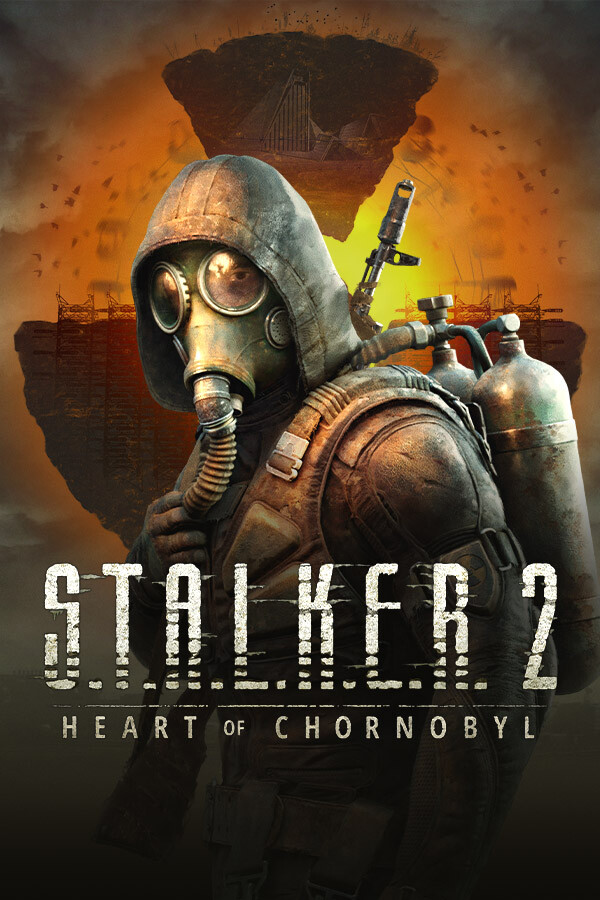
S.T.A.L.K.E.R. 2: Heart of Chornobyl was developed and published by GSC Game World, releasing on January 15, 2025, for Xbox Series X and PC after years of delays, including the unimaginable challenge of continuing development during a war in the studio's home country of Ukraine. The game drops you into the Exclusion Zone surrounding the Chornobyl nuclear disaster, now a supernatural wasteland filled with mutated creatures, reality-warping anomalies, valuable artifacts, and factions of stalkers -- scavengers, mercenaries, scientists, and bandits who venture into the Zone seeking fortune, knowledge, or purpose. You play as Skif, a newcomer to the Zone whose arrival coincides with a series of catastrophic events that threaten to reshape the already volatile landscape. Built on Unreal Engine 5, the game promises the most detailed and dynamic version of the Zone ever created, powered by the new A-Life 2.0 system that simulates the behavior of every NPC, mutant, and faction in the world simultaneously.
Gameplay & Mechanics
At its best, S.T.A.L.K.E.R. 2 plays like nothing else in the FPS genre. This is not a power fantasy -- it is a survival game dressed in shooter clothing, where every bullet counts, every expedition into unknown territory is a genuine risk, and the world operates on its own logic regardless of your plans. The gunplay is deliberate and punishing, with weapons that degrade over time, ammunition that is scarce enough to make every missed shot sting, and enemies -- both human and otherwise -- that can kill you with alarming speed if you get careless. The gun handling has been significantly improved over the original trilogy, with modern ballistics, satisfying weapon feel, and a robust modification system that lets you customize everything from barrel attachments to ammunition types.
The A-Life 2.0 system is the game's most ambitious feature, and when it works as intended, it creates emergent storytelling that is genuinely remarkable. We witnessed a faction war erupt at a checkpoint we had peacefully passed through just an hour earlier, arrived at a quest location to find our target already dead from a mutant attack, and stumbled upon a group of stalkers sitting around a campfire singing folk songs in a moment of quiet beauty that no scripted game would think to include. The world feels alive in a way that very few open-world games achieve, and it rewards the kind of patient, observational play that the S.T.A.L.K.E.R. series has always demanded.
The open world itself is massive and intricately designed. The Zone spans multiple distinct biomes -- from irradiated swamps to abandoned industrial complexes to the eerie beauty of the Red Forest -- and each area has its own ecology of threats and opportunities. Anomaly fields are environmental puzzles that require you to carefully observe particle effects and use bolts (thrown objects that reveal invisible hazards) to navigate safely. Artifact hunting, the primary economy driver, involves venturing into these anomaly fields to retrieve supernatural objects that can enhance your abilities but often come with dangerous side effects. The loop of preparation, exploration, and survival is deeply compelling and unlike anything else on the market.
However, the quest design is where S.T.A.L.K.E.R. 2 most clearly shows its age. Many missions follow a dated structure -- go to location, kill enemies, retrieve item, return to quest giver. While the emergent systems and atmospheric world design elevate even these basic tasks, the scripted quest content itself lacks the narrative sophistication of modern RPGs. Dialogue options exist but rarely lead to meaningfully different outcomes, and the branching story paths, while present, feel less impactful than the promotional materials suggested. The save system is also a source of frustration, with only manual saves available and no autosave during missions, meaning a crash or death can cost you significant progress.
Presentation
Visually, S.T.A.L.K.E.R. 2 is stunning when the technology cooperates. Unreal Engine 5 renders the Zone with a level of detail that is often breathtaking -- volumetric lighting cuts through the fog of irradiated forests, rain gathers in puddles that reflect the desolate skyline, and the interiors of abandoned buildings are filled with environmental storytelling that rewards careful observation. The art direction deserves particular praise for capturing the specific, haunting beauty of post-Soviet decay that defines the series' identity. This is not generic post-apocalyptic brown and grey -- it is a world where nature is reclaiming civilization in beautiful and terrifying ways.
The sound design is world-class. The Zone has a sonic identity that is as crucial to the experience as the visuals -- the distant howl of a pseudodog, the crack of gunfire echoing across an empty valley, the unsettling whisper of a psychic anomaly. The ambient soundscape alone justifies playing with headphones, and the way audio cues communicate danger before you can see it adds a layer of tension that never fades. The music is sparse and effective, knowing exactly when to swell and when to let the natural sounds of the Zone do the work.
The elephant in the room is the technical performance. At launch, S.T.A.L.K.E.R. 2 was riddled with bugs ranging from minor visual glitches to quest-breaking issues that required reloading earlier saves. We experienced floating NPCs, AI companions running into walls during combat, texture streaming failures that left buildings looking like clay models for seconds at a time, and two hard crashes that lost us progress. Performance on Xbox Series X is particularly rough, with frame rate drops into the low twenties in densely populated areas. On PC, a high-end system is required to run the game at acceptable settings, and even then, optimization is clearly a work in progress. Patches have already improved things since launch, but as of this writing, the technical state remains a significant barrier to enjoyment.
Content & Value
At $59.99, S.T.A.L.K.E.R. 2 offers a substantial amount of content for those willing to engage with it on its own terms. The main story campaign runs approximately 25 to 30 hours, but the real meat of the game is in the open-world exploration, side quests, faction activities, and emergent encounters that can easily push a playthrough to 60 or 70 hours. The game supports multiple endings based on your faction allegiances and key story decisions, providing genuine replay incentive for those who want to see alternative outcomes.
The artifact hunting and gear progression systems provide a compelling long-term loop. Finding a rare artifact in a particularly dangerous anomaly field, then deciding whether to sell it for desperately needed supplies or equip it for its combat benefits, is the kind of meaningful decision-making that gives the game's economy real stakes. The weapon modification system, while not the deepest in the genre, offers enough variety to keep combat feeling fresh across the lengthy campaign. For fans of immersive sims and survival games, the content-to-value ratio is excellent. For players who need polished quest design and stable performance to stay engaged, the value proposition is murkier.
What Works & What Doesn't
What works in S.T.A.L.K.E.R. 2 is the stuff that no other game does. The atmosphere is unmatched -- no other open-world game creates this specific cocktail of beauty, dread, and isolation. The A-Life 2.0 system, when functioning properly, produces emergent stories that rival anything a human writer could script. The Zone itself is one of the great open worlds in gaming -- a place that feels genuinely dangerous and rewards careful, thoughtful play over run-and-gun aggression. The gunplay has been modernized without losing the series' distinctive lethality, and the exploration loop of risk and reward is deeply, almost addictively compelling.
What does not work is everything surrounding that core experience. The bugs are too numerous and too impactful to dismiss as launch-window jank. The performance optimization is inadequate for a game with this level of visual ambition. The quest design, while serviceable, feels dated compared to the sophistication of the emergent systems surrounding it. And the save system, in a game where crashes are not uncommon, is an exercise in unnecessary frustration that feels like a philosophical choice masquerading as a design feature. These are not small issues, and they will be dealbreakers for many players.
Pros
- Unmatched atmosphere and environmental storytelling
- The Zone is incredibly detailed and rewarding to explore
- A-Life 2.0 creates genuinely emergent narrative moments
- Exploration and artifact hunting are deeply compelling
Cons
- Significant bugs and technical issues at launch
- Performance optimization needs substantial work
- Quest design feels outdated compared to modern peers
- Save system creates unnecessary frustration
Final Verdict
S.T.A.L.K.E.R. 2: Heart of Chornobyl is a game at war with itself. On one side stands one of the most atmospheric, immersive, and uniquely compelling open worlds ever created -- a place where emergent systems and meticulous environmental design combine to produce experiences that no other game can match. On the other side stands a technically troubled product with outdated quest design and optimization issues that will test even patient players' goodwill. The context of its development -- a Ukrainian studio completing an ambitious AAA game during wartime -- makes the technical shortcomings understandable, and GSC Game World's commitment to post-launch support gives us confidence that many of these issues will be resolved. But we review the game as it exists today, and today, S.T.A.L.K.E.R. 2 is a deeply flawed masterwork. If the Zone calls to you, answer it -- but bring your patience along with your Geiger counter. For those willing to endure the rough edges, there is nothing else quite like it.