A New Saga Begins
The shadow of Geralt of Rivia looms large. When CD Projekt Red announced that The Witcher IV would feature a new protagonist, the collective anxiety of millions of fans was almost palpable. Geralt was not just a character; he was the lens through which an entire generation experienced one of the richest fantasy worlds in gaming. Replacing him felt like replacing the sun. And yet, here we are, sixty hours deep into The Witcher IV, and we can say with genuine conviction that CD Projekt Red has pulled it off. This is not Geralt's story, and that is not only acceptable but necessary. The Witcher IV is a triumphant, sprawling, and emotionally devastating RPG that proves the Continent has stories worth telling beyond the White Wolf's saga. It is also, somewhat inevitably, a game that stumbles in familiar ways, but those stumbles feel minor against the sheer ambition of what has been achieved.
Overview
The Witcher IV places players in the boots of Ciri, now a fully realized Witcher operating in the northern reaches of the Continent. Set years after the events of The Witcher 3: Wild Hunt, the game follows Ciri as she investigates a series of supernatural catastrophes linked to an ancient force that predates the Conjunction of the Spheres. CD Projekt Red has moved to Unreal Engine 5 for this installment, and the technological leap is immediately apparent. The world is vast, encompassing dense forests, frozen mountain passes, sprawling cities, and coastal villages that feel genuinely lived-in. The game's narrative structure borrows from The Witcher 3's best instincts, weaving a main quest that is deeply personal with side quests that are often more memorable than the central storyline. Familiar faces appear throughout, including Geralt himself in a supporting role that is perfectly calibrated, present enough to satisfy fans without overshadowing Ciri's journey.
Gameplay and Mechanics
Playing as Ciri fundamentally changes how a Witcher game feels. Where Geralt was a methodical, preparation-heavy fighter who relied on oils, potions, and signs, Ciri is faster, more aggressive, and possesses Elder Blood abilities that add a supernatural dimension to combat. She can blink short distances mid-fight, slow time in brief bursts, and unleash devastating area-of-effect attacks when her power meter fills. The result is a combat system that feels more action-oriented than The Witcher 3, closer to a character action game than the rhythmic sword dancing of its predecessor. This is both a strength and a limitation. Fights are more dynamic and visually spectacular, with Ciri's teleportation creating balletic sequences of steel and magic that are genuinely thrilling. But the increased pace comes at the cost of some depth. The preparation loop that defined Geralt's combat, studying your bestiary entry, applying the right oil, brewing the appropriate potion, has been streamlined. Ciri still uses Witcher tools, but they feel less essential and more like optional buffs.
The alchemy and crafting systems have been significantly expanded in other ways, however. Ciri can now create mutagens that permanently alter her abilities, craft specialized ammunition for a new crossbow system, and brew experimental concoctions that blend traditional Witcher alchemy with Elder Blood magic. The skill tree is enormous, branching into combat, magic, alchemy, and exploration paths that allow for genuinely different playstyles. We played primarily as a magic-focused Ciri, leaning into Elder Blood abilities, and found the build satisfyingly distinct from a melee-focused approach we experimented with in a second playthrough.
Exploration is where The Witcher IV truly shines. The open world is denser and more vertical than The Witcher 3, with cave systems, multi-level cities, and environmental puzzles that reward curiosity. Ciri's blink ability doubles as a traversal tool, allowing her to reach ledges and shortcuts that add a light platforming dimension to exploration. The detective-like Witcher Sense investigations return, now enhanced with a system that lets Ciri perceive echoes of past events through her Elder Blood, adding a temporal dimension to crime scenes and monster hunts that feels both narratively compelling and mechanically satisfying.
The branching narrative is the game's crown jewel. We encountered at least three major decision points in the main quest where our choices led to dramatically different outcomes, and the side quests are loaded with moral complexity that rivals the Bloody Baron questline from The Witcher 3. One particular quest involving a village haunted by a grief-stricken wraith had us agonizing over the decision for ten minutes before committing, and the consequences of our choice rippled forward for hours afterward.
Presentation
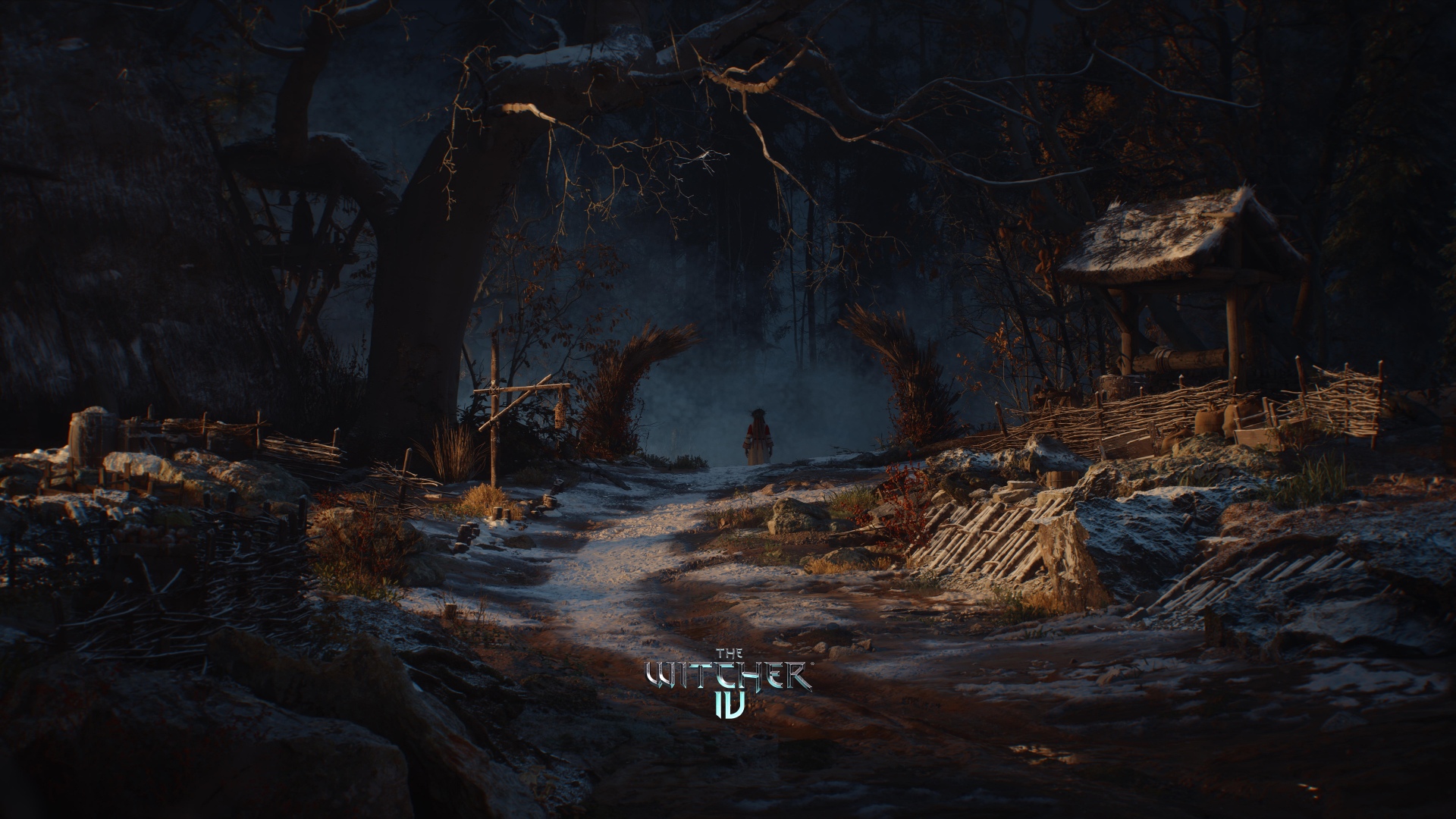
The Witcher IV is, quite simply, one of the most visually impressive games ever made. Unreal Engine 5's Nanite and Lumen technologies allow for environments of staggering detail and lighting fidelity. Walking through a pine forest at dawn, with volumetric fog threading between the trees and sunlight scattering through the canopy, is a genuinely arresting visual experience. Character models are extraordinarily detailed, with facial animations that convey subtle emotion in ways that elevate every conversation. The voice acting across the board is exceptional. Ciri's voice actress delivers a performance that carries the weight of the entire game, portraying a character who is confident and capable but also grappling with the isolation and moral burden of the Witcher's path.
The soundtrack blends the Slavic folk influences of previous entries with new orchestral and choral arrangements that give the game a grander, more mythic quality. Combat music surges with intensity when fighting larger creatures, while exploration themes are understated and melancholic in a way that perfectly captures the Continent's atmosphere of fading beauty and lurking danger. Sound design is meticulous, from the crunch of boots on snow to the wet impact of a silver sword hitting flesh to the ethereal hum of Ciri's Elder Blood abilities activating.
Content and Value
The Witcher IV is enormous. Our main story playthrough took approximately fifty hours, but we spent closer to eighty when including side quests, Witcher contracts, and exploration. And we estimate we saw perhaps sixty percent of the available content. The world is packed with activities that feel purposeful rather than padded, a lesson CD Projekt Red clearly learned from criticisms of open-world bloat in other titles. Witcher contracts are mini-narratives unto themselves, each telling a self-contained story while requiring investigation, preparation, and a climactic monster encounter. The treasure hunts and exploration challenges are well-designed, with rewards that feel proportional to the effort invested.
At sixty-nine ninety-nine, the value proposition is strong. CD Projekt Red has confirmed a substantial post-launch roadmap including free DLC and at least two major paid expansions, and if their track record with The Witcher 3 and Cyberpunk 2077's Phantom Liberty is any indication, those expansions will be worth the investment. The base game, however, feels complete in a way that many modern RPGs do not. The main story reaches a satisfying conclusion, and the world does not feel like it is holding back content for future monetization.
What Works and What Doesn't
What works is nearly everything that matters most. The narrative is rich, branching, and emotionally resonant. Ciri is an excellent protagonist who steps out of Geralt's shadow with confidence and complexity. The world is breathtaking, dense with meaningful content, and rewards exploration at every turn. The alchemy and crafting systems add depth, and the Elder Blood abilities bring a welcome freshness to combat. What does not work is less damning but worth noting. The game launched with a noticeable number of bugs, including occasional T-posing NPCs, quest triggers that fail to fire, and one hard crash that cost us about twenty minutes of progress. CD Projekt Red has been aggressive with patches, and the experience has improved significantly since launch day, but the shadow of Cyberpunk 2077's troubled release lingers. Combat, while flashy and fun, could benefit from more enemy variety and deeper mechanical challenge. And console load times, particularly on PS5 when fast-traveling across the map, are longer than we would like for a current-gen exclusive.
Pros
- Rich branching narrative with genuinely impactful choices
- New protagonist Ciri is excellently realized and compelling
- Gorgeous Unreal Engine 5 visuals that set a new standard
- Deep alchemy and crafting systems with meaningful progression
Cons
- Some launch bugs present, though rapidly being patched
- Combat could use more depth and enemy variety
- Load times on console are occasionally frustrating
Final Verdict
The Witcher IV is the RPG many of us were afraid CD Projekt Red could not make. After the Cyberpunk 2077 debacle and the daunting task of following up one of the greatest RPGs ever made without its iconic protagonist, the odds felt stacked against this project. And yet, here it is: a sprawling, gorgeous, narratively ambitious RPG that proves the Witcher franchise has a future beyond Geralt. Ciri is a worthy successor, the Continent has never looked or felt more alive, and the quest design continues to set the standard for the genre. The launch bugs are disappointing but manageable, the combat could be deeper, and the console performance needs optimization. But these are blemishes on what is otherwise a remarkable achievement. The Witcher IV does not quite reach the masterpiece status of its predecessor's final form, but it comes remarkably close, and with expansions on the horizon, we would not bet against it getting there. This is one of the best RPGs of 2025, and one of the best arguments for why single-player, narrative-driven games remain the most powerful experiences our medium can offer.